


Blister Packing Machine
JOCHAMP blister packing machines are engineered for consistent forming, accurate product feeding and secure sealing, with servo traction, PLC control, vision inspection and flexible forming options for different products and packaging formats.
○ Excellent stability
○ Convenient to operate
○ Available with various accessories
○ Come with touch screen controls
What Is a Blister Packing Machine?
A blister packing machine is an automated packaging system used to pack tablets, capsules, ampoules, and other small products into individual unit doses. It forms cavities in the packaging material, accurately places products into the pockets, and seals them with lidding material through heat sealing or cold forming before cutting the packs to the required format. Depending on the product, material, and production requirements, a blister packaging machine can be configured with different forming, feeding, sealing, and inspection systems.
JOCHAMP’s blister packing machine range serves different products and industries, with configurations to meet various production requirements. From forming and automatic feeding to sealing and inspection, the machines are designed for stable performance, accurate product positioning, reliable sealing and efficient operation. JOCHAMP has supplied blister packing machines to customers worldwide for many years, with the range meeting relevant standards and certifications, including CE, SGS, ISO 9001, and cGMP, while providing reliable blister sealing machine solutions.
Types of Blister Packing Machines
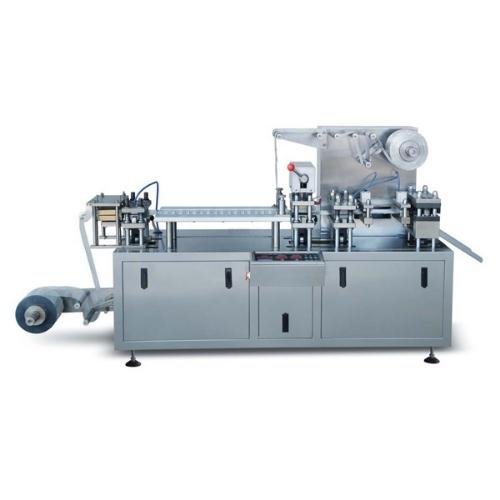
JCDP-120 Blister Packing Machine
The JCDP-120 blister packing machine is a compact solution for small-batch production, laboratories, and flexible packaging applications. Its modular design, PLC control, and touchscreen operation provide simple and reliable operation. It supports PVC thermoforming and ALU-ALU cold forming, with a capacity of 10–80 sheets/min, a maximum forming area of 120 × 90 mm and a forming depth of 20 mm.
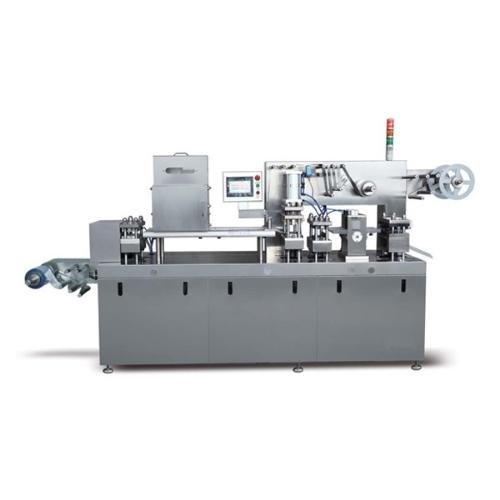
JCDP-180 Blister Packing Machine
The JCDP-180 blister packaging machine is designed for higher-output applications in pharmaceutical, food, cosmetics, stationery, and hardware packaging. Servo traction, stepless speed regulation and positive-pressure forming provide stable packaging performance, while automatic feeding, batch printing and cutting improve production efficiency. It offers 6,000–14,000 sheets/hour, a maximum forming area of 160 × 110 mm and a forming depth of 25 mm.
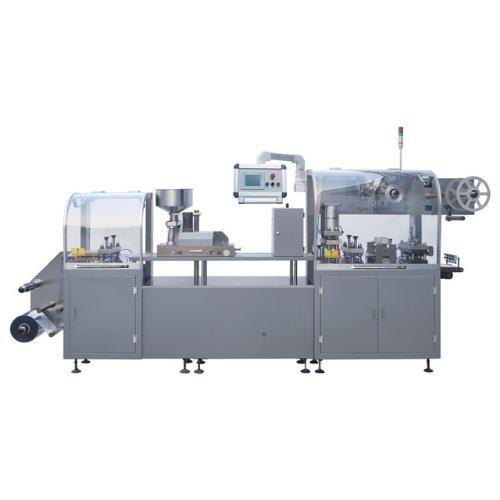
JCDP-260 Blister Packing Machine
The JCDP-260 blister packing machine combines higher processing capacity with precise automated control. It features servo-driven material conveying, photoelectric indexing, independent temperature control, and tool-free changeover. An optional vision system can detect empty cavities, broken tablets, and product variations. The machine provides 25–50 cycles/min for Al-PVC and 20–35 cycles/min for Al-Al, with a maximum forming area of 250 × 130 mm and a depth of 25 mm.
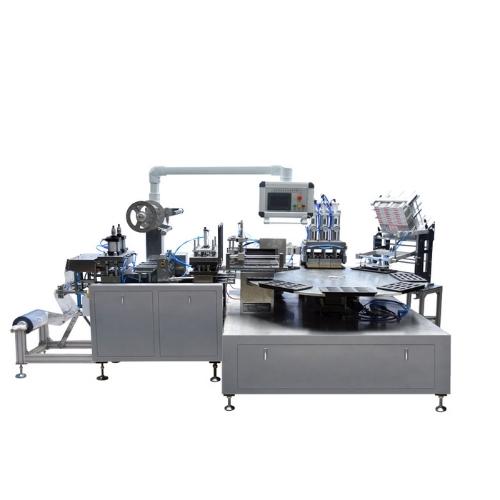
JCB-350 Rotary Blister Card Packing Machine
The JCB-350 rotary blister card packing machine is suitable for toothbrushes, toothpaste, glue, stationery, batteries, and other card-packed products. Its rotary structure saves floor space, while Omron PLC control and three Mitsubishi servo motors ensure coordinated operation. The circulation sealing system uses only 4–8 sealing molds, helping simplify changeover and reduce material consumption. It supports card sizes up to 350 × 220 mm and operates at 12–20 cycles/min.
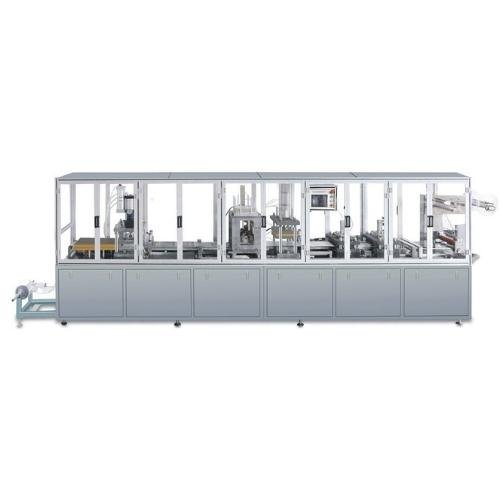
JCB-600 Blister Card Packing Machine
The JCB-600 blister card packing machine is designed for larger-format packaging of stationery, cosmetics, medical devices, electronics, hardware, and automotive parts. It combines Omron PLC control with three Mitsubishi servo motors and a stainless-steel 304 structure. Its rotary circulation sealing system uses 4–8 sealing molds for easier format changes. The machine supports card sizes up to 570 × 300 mm, a forming area of 550 × 220 mm and a speed of 12–20 cycles/min.
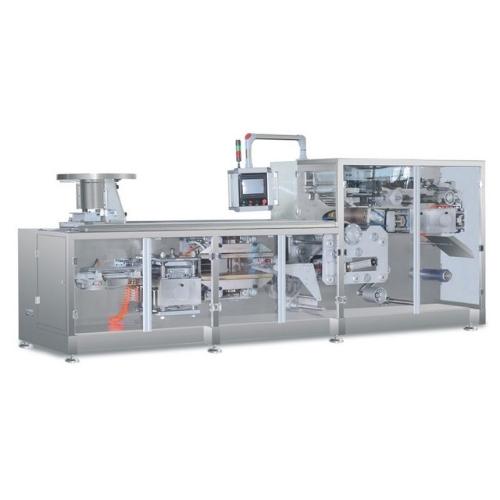
JCDH-260 High-Speed Blister Packing Machine
The JCDH-260 high-speed blister packing machine is designed for continuous, high-volume production, especially for tablets and capsules. Flat-pressure forming, roller mesh sealing, and servo-controlled traction provide stable forming, feeding, and sealing. Tool-free mold changes and optional vision inspection and automatic feeding further improve efficiency. The machine delivers up to 360 pcs/min, with a maximum forming area of 240 × 260 mm and a forming depth of 12 mm, supporting pharmaceutical PVC and PTP aluminum foil.
Blister Packing Machine Models Comparison
Model | Machine Type | Suitable Applications | Key Features | Capacity | Max. Forming Area | Max. Forming Depth | Packaging Materials |
JCDP-120 | Compact Blister Packing Machine | Small batches, laboratories, tablets, capsules | Compact modular design, PLC control, PVC thermoforming & ALU-ALU cold forming | 10–80 sheets/min | 120 × 90 mm | 20 mm | PVC, PTP Aluminum Foil |
JCDP-180 | Blister Packing Machine | Pharmaceutical, food, cosmetics, stationery, hardware | Servo traction, positive-pressure forming, automatic feeding, batch printing | 6,000–14,000 sheets/hour | 160 × 110 mm | 25 mm | PVC, PTP Aluminum Foil |
JCDP-260 | High-Performance Blister Packing Machine | Higher-output pharmaceutical and product packaging | Servo conveying, photoelectric indexing, independent temperature control, optional vision inspection | 25–50 cycles/min (Al-PVC) | 250 × 130 mm | 25 mm | PVC, Aluminum Foil |
JCB-350 | Rotary Blister Card Packing Machine | Toothbrushes, batteries, stationery, glue, hardware | Rotary structure, 4–8 sealing molds, servo control, reduced material consumption | 12–20 cycles/min | 330 × 180 mm | 40 mm | PVC, PET, PS |
JCB-600 | Large-Format Blister Card Packing Machine | Cosmetics, electronics, medical devices, hardware, auto parts | Horizontal design, rotary circulation sealing, 4–8 sealing molds, stainless-steel structure | 12–20 cycles/min | 550 × 220 mm | 40 mm | PVC, PET, PS |
JCDH-260 | High Speed Blister Packing Machine | High-volume pharmaceutical and food packaging | Flat-pressure forming, roller mesh sealing, servo traction, fast mold change, optional inspection | Up to 360 pcs/min | 240 × 260 mm | 12 mm | Pharmaceutical PVC, PTP Aluminum Foil |
Blister Packing Machine Selection Guide
Choosing the right blister packing machine depends on your product type, packaging material, production capacity, package size, and automation requirements. Consider the following factors when selecting a suitable machine:
Product Type and Packaging Format
Different products require different feeding and forming solutions. Consider the product shape, size, and final packaging format first.
Tablets, capsules and other small products → JCDP-120 / JCDP-180 / JCDP-260
Card-style products such as batteries, toothbrushes, stationery and hardware → JCB-350 / JCB-600
High-volume pharmaceutical production → JCDH-260
Production Capacity
The required output is one of the most important factors when selecting a blister packaging machine. Choose a machine that can meet your current production needs while allowing room for future growth.
For smaller production volumes, a compact machine may be more practical, while higher-volume production requires faster forming, feeding and sealing systems.
Packaging Material
The packaging material determines the forming and sealing process. Common options include PVC, PTP aluminum foil and ALU-ALU materials for pharmaceutical blister packaging, as well as PVC, PET and PS for card-style packaging.
Make sure the selected machine supports the material, thickness and forming method required for your packaging.
Package Size and Forming Requirements
The product dimensions and final package format should match the machine’s forming area and forming depth.
For larger card formats → JCB-600
For more compact card packaging → JCB-350
For standard pharmaceutical blister formats, the JCDP and JCDH series offer different forming areas and depths to accommodate different product and package sizes.
Automation and Changeover Requirements
Consider the level of automation required for feeding, sealing, inspection and product changeover. Depending on the model and configuration, JOCHAMP machines can be equipped with servo traction, automatic feeding, batch printing, vision inspection and automatic reject systems.
If you package multiple products or formats, quick mold changeover and flexible machine configurations can also help reduce production downtime.
Contact for Customized Solutions
If you are unsure which blister packing machine is right for your application, JOCHAMP can help you select a suitable model based on your product, packaging material, output, package dimensions, and automation requirements.

Blister Packing Machine Advantages

Product Integrity
JOCHAMP blister packing machines are designed to provide clean and secure packaging for tablets, capsules, and other products. Depending on the model and packaging material, the machines support PVC thermoforming, PTP aluminum foil, and ALU-ALU cold forming, creating individual sealed cavities that help protect products from moisture, air, and external contamination. Controlled forming and sealing systems help the blister sealing machine maintain consistent packaging quality.

Tamper Proof
The individual cavity structure of blister packaging helps protect products from physical contact and external forces after sealing. For pharmaceutical applications, JOCHAMP blister packaging machines can provide controlled forming and reliable sealing, while optional vision inspection and automatic reject systems can help identify empty cavities, broken tablets and other packaging defects. The JCDH-260 uses roller mesh sealing for consistent sealing performance in high-volume production.

Low Cost
JOCHAMP blister packing machines are designed to improve production efficiency while making effective use of packaging materials. Features such as servo-controlled feeding, automatic material feeding, quick mold changeover, and rotary circulation sealing can help reduce material waste, downtime, and manual operations. For example, the JCB-350 and JCB-600 use 4–8 sealing molds in their rotary circulation sealing systems, helping simplify changeover and reduce packaging material consumption.

Enhance Identification
Blister packaging provides a clear and organized way to present individual products and product information. JOCHAMP blister packaging machines can integrate batch number printing, embossing, and other marking functions into the packaging process, helping improve product identification and traceability. Depending on the machine configuration, required information can be added during the packaging process so that each blister or card package carries the necessary identification details.
How Does a Blister Packing Machine Work?
A blister packing machine forms individual cavities in the packaging material, fills them with the required products, and seals them with a lidding material to create finished blister packs. Depending on the machine configuration and packaging requirements, the forming process may use flat-plate or rotary systems, together with different forming and sealing methods to achieve stable performance from the blister sealing machine.
For a complete blister packaging line, the machine can also be integrated with automatic feeding systems, printing equipment, and cartoning machines to reduce manual handling and improve production efficiency. Compared with manual packaging, automated equipment can provide better consistency while helping improve production safety and sanitation.
Material Feeding → Blister Forming → Product Feeding → Sealing → Printing → Cutting → Inspection → Finished Packs

Blister Packing Machine Options
The advanced blister packing machines are categorized into three options, according to various processes. The following defines their values:
• Roller blister packaging machine: The forming film is softened and heated using a heating device. With negative vacuum pressure, the blister is sucked into the forming molding rollers. It achieves single-sided coated surface cover films.
• Plate blister sealing machine: This machine is structured with roller and flat-type blister packing machines. The flat one uses blow molding, while the roller sealing device is naturally sealed.
• Flat blister packing machine: This machine uses a flat heating device that heats and softens the films.

Blister Machine Product Packaging
JOCHAMP offers advanced blister packing machines that produce various packaging products, including the following:
• Half bubble shell
• Insert card
• Folded bubble shell
• Threefold bubble shell
• Double bubble shell
The blister packaging machines are also classified as blister boxes, blister molds, and blister trays. These solutions are supported by high-performance blister sealing machine systems to ensure stable and precise sealing results. You can send us your machine’s required specifications, and we will immediately do the customization processes!
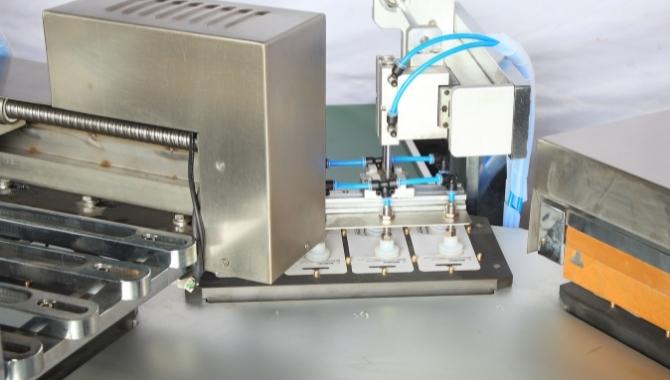
Customization Process
Customers provide product details such as type (tablets, capsules, ampoules, etc.), production capacity, and packaging format. Our team evaluates and defines the most suitable blister packaging machine solution accordingly.
Based on customer requirements, our engineers design a tailored blister packing machine configuration, including forming method, sealing structure, and automation level, to ensure stable and efficient production performance.
Both parties confirm machine specifications, workflow, and customization details to ensure the blister sealing machine meets operational stability and production efficiency expectations.
Production is carried out using advanced equipment and strict quality control standards, ensuring every blister packaging machine meets international certifications such as CE and ISO.
After production, each unit undergoes comprehensive testing, including forming accuracy, sealing strength, and running stability, to ensure the blister packing machine operates reliably for long-term use.
Our company offers you professional packaging advice, shipping information, and technical assistance for your Blister Sealing Machine.
Choose Blister Packing Machine from JOCHAMP


JOCHAMP specializes in customized blister packing machines designed for sensitive products such as medicines and other applications requiring hygienic and reliable packaging. Our equipment can be configured for automatic operation, high-capacity production, and different sealing requirements, providing reliable blister sealing machine solutions for various applications. Each machine undergoes strict quality control to support stable performance and long-term operation.
With experienced engineers, skilled workers, and advanced production equipment, JOCHAMP focuses on delivering reliable packaging solutions and consistent machine performance. We also provide support throughout the process, from selecting a suitable machine configuration to delivery and installation at your facility.
Certifications and Quality Standards
JOCHAMP is committed to maintaining consistent quality standards throughout the design and production of its packaging equipment. Our blister packing machines are manufactured in accordance with relevant quality and production requirements to support reliable and stable operation.
• CE Certification – Demonstrates that applicable equipment meets relevant European safety, health and environmental requirements.
• SGS Certification – Provides third-party verification and inspection support for relevant quality and compliance requirements.
• ISO 9001 Certification – Reflects a structured quality management system covering key processes in production and quality control.
• cGMP Standards – Support the hygienic and controlled production requirements commonly associated with pharmaceutical and related packaging applications.

JOCHAMP Blister Packing Machine

JOCHAMP After-Sale Services Offered
JOCHAMP has a service department that operates after-sale services, such as:
• Installation, renovation, or relocating blister packing machines and the whole packing lines.
• Offers production optimization and competent feedback
• Technical personnel training and optimal machine utilization
• Break down assistance, maintenance, and tailor-made services
• One-stop consumable and spare parts delivery
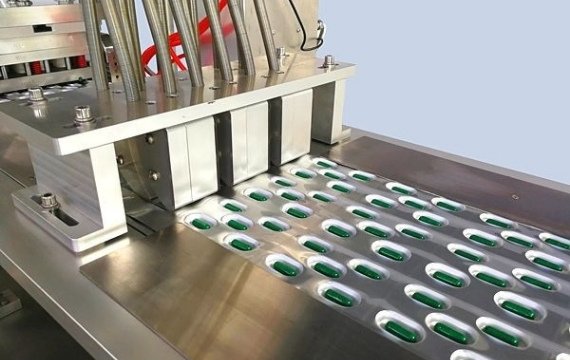
Added / Optional Accessories
JOCHAMP customizes various blister packaging machines with added or optional accessories, such as follows:
• Pre-cutting
• Cold Forming
• Added Feeding Area
• Automatic Feeder
• Inspect & Rejecting Control System
• Printing Mark Registration
Custom Blister Packing Machine for Various Industry

Pharmaceuticals
Using a blister packaging machine is a great way to package pills and other medication doses. Pharmaceutical medications often come packaged in blister cards, used as a unit dose container. Because they keep the goods fresh and sealed, they extend the shelf life of products.

Food Industry
JOCHAMP manufactures high-speed blister packaging machines for the food sector. Users may use this machine while packaging their food goods to keep them safe from other contaminants during transportation and storage. As a result, the quality of the final product will not be affected.

Health Care
There are no external physical factors that may affect the integrity of a Blister packaging. Medical instruments such as syringes and needles may be kept in good working order. Hygienic blister packing solutions store medical items in sterile environments.

Chemical Factory
Blister packaging machines make labeling a high-profile part of the operation. It makes sure that the labels and other information about the products are easy to find. This characteristic of the blister packaging machine is beneficial in a chemical manufacturing facility.
One-Stop Blister Packing Machine Provider in China
Are you interested in purchasing a blister packing machine at a competitive price for your business? We know the solution to what you need. The blister packing machine offered by JOCHAMP is of the highest quality. Additionally, they are for any packing requirements. Send us an email right this minute!
FAQ
Q1: Are JOCHAMP machines fully automatic or semi-automatic?
JOCHAMP offers multiple configurations, including fully automatic blister packaging machines and semi-automatic models. Customers can choose and customize the most suitable blister packing machine based on production capacity, budget, and specific manufacturing requirements.
Q2:What after-sales support does JOCHAMP provide?
JOCHAMP offers comprehensive after-sales services for every blister packaging machine, including installation, relocation, production optimization, technical support, maintenance, and spare parts supply. Our goal is to ensure long-term stable operation of your blister sealing machine system.
Q3:Do you provide training for machine operation and maintenance?
Yes, we provide full technical training for operators, covering machine operation, daily maintenance, and best usage practices. This helps customers maximize the efficiency of the blister packing machine and ensure safe and stable production.
Q4:Can blister packing machines be customized for different product sizes?
Yes, our blister packaging machine supports flexible mold customization, allowing different cavity sizes and shapes. This makes the blister packing machine suitable for a wide range of product specifications and packaging requirements.
Q5:Are JOCHAMP blister machines safe and hygienic during operation?
Yes, all JOCHAMP blister sealing machines are designed with safety and hygiene in mind, using enclosed structures and stable control systems to ensure clean production environments, especially for pharmaceutical applications.
Related Product
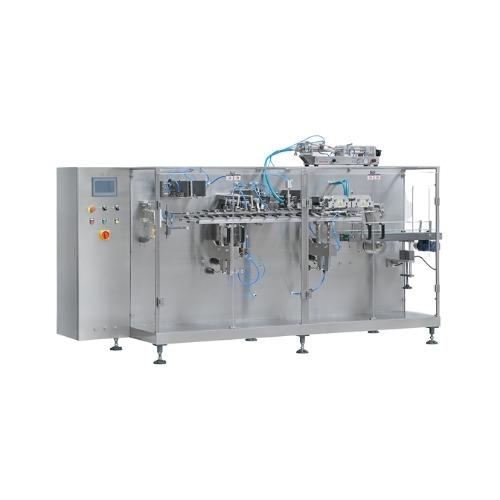
Blister Packing Machine: The Ultimate Guide
Before choosing your next blister packing machine, read this guide. It has all information that will help you choose high quality and reliable blister packing machine. So, if you want to be an expert in blister packing, read this guide.
What Is Blister Packing Machine?
A blister packing machine is an electromechanical machine that has the capability of placing or packing the required products into the required blisters.
blister packing machine
Some of these products include capsules, tablets, pills, and suppositories.
Benefits Of Blister Packaging Machine
There are quite numerous areas where blister packing machine application will necessitate effective packaging of products into blisters.
The following are some of the benefits that blister packing machine aids in companies such as the food, chemical, and drug industries. They include;
Guarantees Accurate Dosage
The use of a blister packing machine guarantees the accuracy of dosage.
The blister packing machine aids in packing products into specific blisters which minimize the usage of the prescribed products.
This is an easy truck of the intake of the product especially drugs and supplements.
Its More Cost-effective
The use of a blister packing machine for blister packing is less-costly compared to the use of plastic packing.
Additionally, the cost of packing pills capsules is relatively low as the manufacturing of the blisters packs is low which also holds numerous products than plastics.
This saves on the cost of having to pack relatively small products such as pills or even batteries in multiple packs.
Product Integrity Is Guaranteed
Blister packing machine is more applicable in the drug and food industry.
This means a high need to always maintain ample conditions for the products you are dealing with.
Using a blister packing machine ensures that the products are well sealed to prevent exposure to moisture.
This ensures the products in the blister packs maintain the required quality before usage. This seal provides resistance to rust and water hence improving the quality of the products.
Improves Products Identification
Product identification is very crucial in every industry.
This involves the labeling of products for easy sampling and identification.
The blister packing machine aids in labeling these products during the blister packing process.
Product labeling normally involves listing product names, and usage among other information.
With these, you can easily identify the products you need while still saving on time.
Tamper-proof Guarantee
The use of a blister packing machine results in blister packs that have zero or minimal likelihood of damage from external forces.
This guarantees the integrity of the products (capsules and pills) for consumer wellbeing.
Also, the blister packing machine creates a volatile corrosion inhibitor that prevents contamination of the products in the blister packs.
To get the products out of the blister packs it will require you to tear off the barriers thus reducing the rate of contamination.
It’s also possible to know when your products have been tampered with
Types Of Blisters Packing Machine
Blister packing machine varies depending on the type of operation they perform. The following are the most common types of blisters packing machines;
Automatic Strip Blister Packing Machine
An automatic strip blister packing machine is ideal for packing capsules or tablets into strips. This type of blister packing machine is categorized into three.
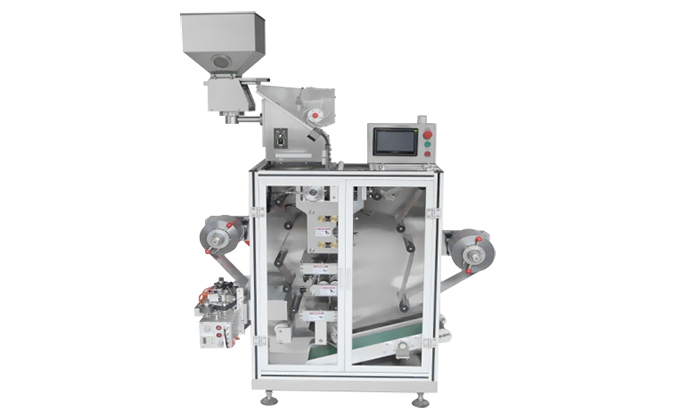
Automatic strip blister packing machine
They include;
Roller-type Blister Packing Machine
Roller-type blister packing machine works only by heating and softening the forming film through the heated device.
The blister is then sucked through the negative vacuum pressure to form a molding roller on the roller.
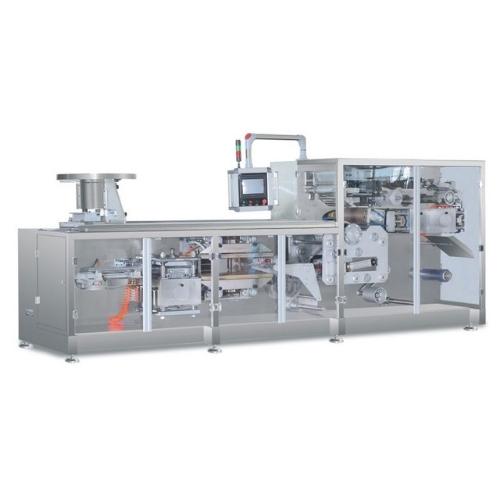
roller type blister packkng machine
The filling device will then fill the packed products into the blister passing it through the roller type for sealing using adhesives under regulated temperatures.
Roller Plate Blister Packing Machine
This blister packing machine borrows the working principle of roller type and the flat plate which facilitates blow molding.
The roller type results in the sealing of the blisters.
roller plate blister packing machine
Flat Plate Blister Packing Machine
The forming film undergoes heating and softening through the flat heating device.
The results obtained of the softened will be blown using the compressed gas into the blisters.
As a result, the device used for filling will fill up the products into the blisters.
Later the blister will pass through a flat sealing device to seal under the right temperature and pressure.
flat plate blister packing machine
Also, a batch number is included during the sealing process of the blister packs.
PVC Blister Packing of Tablets
This type of blister packing machine is ideal for packing solid and liquid products.
PVC blister packing machine ensures the safety of products from dust and steam.
It’s also capable of packing both large and small quantities of products.
These blister machines usually use aluminum as the starter material while the PVC forms the forming film.

PVC blister packing for tablets
Forming of blisters using these machines depends entirely on thermoforming technique which aids in the formation of the cavities.
Intermittent Motion Blister Packing Machine
This type of blister packing machine is ideal for packing solid dose products such as capsules or coated tablets and tablets are some of the forming materials.

intermittent motion blister packing machine
Other types of blisters packing machines include
• Self-checking molding aluminum blisters packing machine
• LFA high quality blister strip packing machine
• Blister packing machine with integrated cartoner
• Continuous motion blister packing machine
Classification Of Blister Packaging
Blister packing is a mode of packaging which is a s a result of heating and molding plastic materials to form a certain shape which is usually in the form of a pocket.
Some of these plastic materials include a polyvinyl pocket. Some-based plastics, high-density polyethylene among other plastics.
The following are some of the most common available classifications of blister packaging. They include;
Blister
The transparent plastic in the blister results from a transparent plastic sheet.
This transparent plastic is shaped into a convex shape that improves the appearance of the blister and also provides protection.
Depending on the form of the bubble shell formed, blisters can vary from, double bubble shell, insert card bubble shell, suck card bubble shell,ss and single bubble shell.
Vacuum cover, plastic mask, or bubble cover also refer to the blister.
Blister Box
This blister box is also known as a folding box or ceiling blister depending on which side joins the other one.
When the bottom joins with the cover it is called a folding box. The ceiling blister occurs when the bottom and the cover separate.
Blister Tray
This blister packaging is also known as plastic nettles.
The plastic with these nettles is achieved from the plastic plate through the blister process. This shape and grooves improve the appearance of the blisters and also protect the products sealed in.
Blister Mold
Molds vary greatly in quality and the cost of material used in making the molds.
Aluminum molds have been the most expensive than gypsum molds and copper molds have been the cheapest.
Normally the holes will be drilled on the molds which serve as vacuum adsorption of the sheets.
This results in the formation of the blisters.
Parts Of Blister Packing Machine
The following are the main parts of the blister packing machine that aids in the packing process. They include;
Touch Screen Interface
Blister packing machine is made up of a touch screen interface that is human-friendly to aid in operating the machine.
This interface provides ease of navigation during the packing process of the blister packs.
You can easily navigate, troubleshoot, and configure the blister packing machine to the specifications you want.
It’s also easy to monitor and control the whole blister packing process.
This interface also allows you to troubleshoot any crisis during the blister packing process.
Blister Pack Tooling Unit
Blister pack tooling unit comes in different designs as well as the configuration to enable thermoforming, and cold forming of the blister’s packs.
It also facilitates the continuous production of blister packs.
It determines the shapes of the blister packs making it more crucial in the blister packing process.
Polyvinyl Chloride Feeding Roller
Synchronization and the continuous motion of the PVC feeding roller aid in moving the materials for an easy blister packing process.
Blister packing machine uses a motor which facilitates continuous movement of the machine by ensuring;
Full automation of the P feeding roller and the ability to use the user interface to control numerous operations.
Continues feeding mechanism for the machine
Efficient packaging needs are met by providing a simple integrating system.
It’s able to meet most of the requirements when it comes to feeding materials.
Turning Rollers
Turning rollers aids in the feeding of the materials to the machine.
This is achieved through the high tension applied by the turning rollers to the materials.
Turning rollers with the help of rolling systems will feed all the materials to the blister packing unit.
Electric Motor
The electric motor facilitates the movement of all the parts of the blister packing machine with the help of shafts, gears, and belts.
Also, it can control the speed at which the moving parts operate to meet all the necessary blister packing requirements.
Cavity Forming System
The cavity-forming unit aids in the formation of the cavities you will need for placing your products.
This part comprises 18 other sub-parts that facilitate the formation of preferred shapes of civility.
All these parts can easily be adjusted to fit all your requirements.
Guide Rail
Guide rail facilitates the movement of materials from one unit to the next one during the blister packing process.
Guide rail comprises the following parts which facilitate its operation. They include;
• Integrated guide rail
• Turning roller
• Adjusting handle
• Guide rail ide plate
• Guide rail brace
• Guide rail foot seat.
Heating Box
The heating box receives materials directly from the feeding unit.
In the heating box, the materials will be heated to the required temperature which will be read for forming in the nest stage.
The heating box comprises;
• Forming die holder
• Upper heating pate adjusting bolt
• Heating plate bracket
• Turning cycle
Material Feeding Unit
This part facilitates the filling of packing materials into the right cavities.
Also, it is made up of an empty detection equipment to prevent the filling of the empty cavities.
Heat Sealing Unit
This part facilitates the sealing of the products in the cavity during the blister packing process.
Bearing seat and cam case are among the parts that help in the heat-sealing process.
Pressing Mechanism Unit
This part aids in forming the final permanent seat on the products in the blister packs.
Waste Material Winder
This part aids in removing/winding waste materials from the form fil and the final product in the cavity.
Sealing Material Feeder
This unit contains all the materials that are ready for feeding into the cavities through the guard rail.
Blanking Mechanism
The blanking mechanism cuts out all the blister packs that are fully processed to separate them from the main material.
The size of the blanking mechanism depends largely on how cavity each set has.
Tow Mechanism
It facilitates easy movement of the packed blisters from one level to another. More so, it makes sealing more efficient.
Product Chute
This part facilitates the exit/removal of the final packed blister from the blister packing machine.
Lubrication Unit
This part provides overall maintenance of the blister packing machine by oiling and greasing all the moving parts on the blister packing machine.
Blister Packing Machine Working Principle
A blister packing machine aids in the process of packing products in blisters. This process involves a series of steps which include;
Turning On The Blister Packing Machine
The whole blister packing process begins with switching the blister packing machine.
This initiates the rollers on the machine to start moving, moving the materials to the next stage.
Heating Off The Raw Materials
In this stage, the materials will undergo heating at a specific temperature. This allows the formed fil to heat up into a soft film which forms the cavities.
Note, that the temperature setting depends on which type of material you are using for the production of blister packs.
Both the upper plate and lower plate help maintain consistency and uniform heating of the forming film.
Film Cavity Formation
For quality and suitable formation of cavities, die plates or compressed air will be used to necessitate thermoforming.
The blister packing machine will later cool down to allow the formation of cavities which you can then easily place your products.
A stamping mechanism and punching pins are employed during the cold formation of cavities.
The cooling down allows the blister pacts to obtain a rigid shape as desired for the packing of different products.
Filling Cavities And Checking Empty Cavities
In this stage, the blister cavities will be filled with the required products before sealing is done.
The filling process can either be manual or automatic depending on which machine you will be using.
In most cases, you will find blister packing machine has an empty pocket detector to detect any empty cavities, especially when using aluminum foil.
Sealing Of Blisters
The already filled blisters are ready for sealing at this stage.
Lidding material is used to make the seal on the blister packs and it should be reading available every time the forming film reaches the sealing unit.
After placing the lidding material, the heat-sealing unit will seal up the blisters under appropriate heat and temperature.
In this case to ensure firm sealing high temperature and pressure are applied during the heat-sealing process.
Trimming And Printing The Blister Packs
This is the final stage of the blister packing process.
The blister pack will move to the next stage of printing where the machine embosses the set message onto the blister pack.
Some of the information that the blister packing machine will emboss on the blister pack includes; batch number, expiry date, and date of manufacture.
The blister pack will then move forward for trimming to get the required units before moving out of the blister packing machine.

blister packing machine princple
Applications Of Blister Packing Machine
Blister packing machine is commonly used when;
• Packing capsules and tablets from capsule filling machines
• Providing tamper-proof seals to protect the quality of the products.
• Gives clear indications to prevent over usage of the product.
Blister packing machine is commonly used in industries such as;
• Pharmaceutical industries
• Food industry for packaging food
• Cosmetic industries package different types of cosmetic products.
• Chemical industries to packaged different types of chemical products
Blister Packing Machine Vs Strip Packing Machine
Blister packing machines and strip packing machines have both similarities and differences.
Both of the packing machines are ideal for packaging pharmaceutical products in different drug industries.
For blister packing machines, the formation of blister is normally through thermoforming or cold formation processes. For strip packing machines thermoforming and cold-formation processes are absent.
With a blister packing machine, less space is required, unlike a strip packing machine which requires mere space during packing.
With blister packing machine. The speed of production is relatively high unlike in strip packing machines where production speed is low.

strip packing machine
It’s possible to add batch coding, printing, and perforation while using a strip packing machine. For blisters packing machines, you can only add printing and batch coding but not perforation.
The blister packing machine uses plastics and aluminum foil as the main raw materials in the production of blister packs.
The strip packing machine uses paper foil and cellophane as the main raw materials.
A blister packing machine is used in the production of blister packs that are of a wide range to accommodate different packaging of products.
For instance, packs for batteries, and toothbrush packs among others.
Strip packing machine packs are used to pack products such as batteries, toothbrush among other products.
The blister packing process undergoes a series of four stages, unwinding, film-forming, filling the film and trimming, and printing.
Strip packing involves a series of only three steps processes.
With blister packing, consumers can vividly view the products they are consuming which is not the case with strip packing.
Blister packing is more cost-effective compared to strip packing.
Moreso, materials used in the production of blister packs are relatively cheap compared to those of strip packing.
Troubleshooting Blister Packing Machine
Troubleshooting blister packing machine allows early detection of problems that may inhibit machine operations.
The following are the most common problems you may encounter during blister packing machine troubleshooting. They include;
Differences In Thickness Of The Materials
This compromises the integrity and quality of the packs which results in the barrier around the products.
Also, you will find the material quality will in the end affect the thickness of the material.
Correct machine programming and ensuring material thickness uniformity is one way you can prevent this problem.
Missing Products In The Cavity
When the packing speed of the blister packing machine is high or even faulty parts, then the products will miss the cavities.
It’s important to set a uniform speed while filling the cavities with the products. Also, repair all the broken parts on the blister packing machine.
Improper Sealing Of The Blister Packs
When there is not sufficient heat or enough pressing the seal on the blister pack will peel off which may compromise the quality of the products.
Its therefore important to ensure the heating unit is well fixed and the pressing unit (pneumatic system).
More Resources:
Alu Alu Blister Packaging Machine
High Speed Blister Packaging Machine
For all your blister packing machine needs, contact us now.