


Shrink Sleeve Machine Manufacturer
For your shrink sleeve machine needs, Jochamp got your back. We supply superior quality models of this machine that can meet your standards. It can label a wide range of container types both glass and plastic containers.
- Offer better flexibility and efficiency
- 50 – 300 bottles per minute or customized
- Mechanized and automated equipment
- Equipped with height adjustment system
JOCHAMP Shrink Sleeve Machine
Jochamp automatic shrink sleeve machines can easily be integrated into your existing packaging lines. Being a leading manufacturer, we can design a machine with a complete system consisting of a conveyor, applicator, and heat tunnel. These machines are perfect for different product widths ranging from 30mm-140mm and label position applications. The product includes a water bottle, wine bottle, medicine bottle, pump bottle, and more.
With 15+ years of manufacturing experience, Jochamp ensures high-technology and quality shrink sleeve machines for your business. It is easy to operate and adjust in settings. Easy to maintain, strong construction and provide a robust performance guarantee. For your unique requirements, contact us immediately!
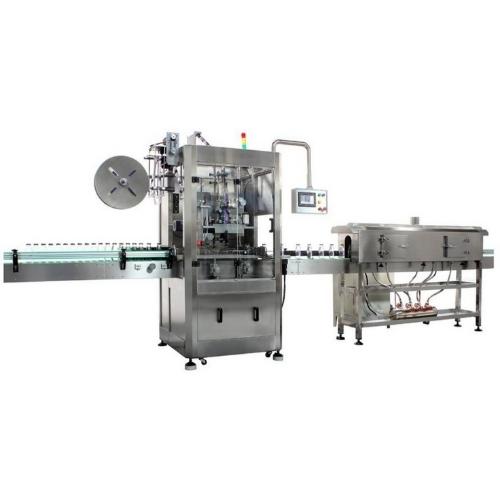
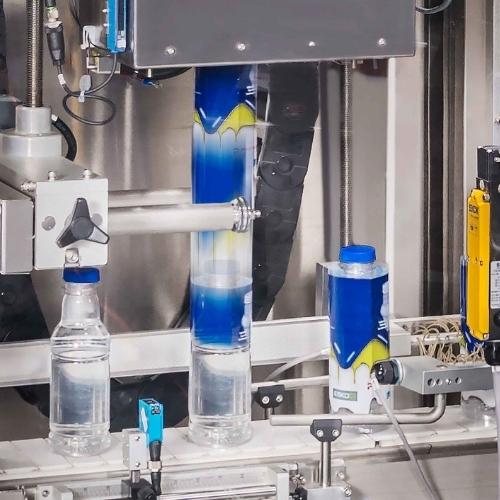
ZWG-350 Shrink Sleeve Machine
This machine is a shrink wrapping machine of sleeve label type, which is widely used in various types of bottles.
- Step mechanism drive, any drive belt replacement can be completed quickly, compared with the traditional multi-layer link arm type (replacement and maintenance takes more than six hours), maintenance is easy and simple, and will never affect production.
- The unique design of the cutter seat in the country, suitable for 25mm~130mm containers, the cutter seat is completely free of replacement and debugging, and the exclusive use of light touch man-machine, which automatically searches for the origin and positioning, which is safe and convenient, leading similar products.
- Single-shrinking label feeding tray design, moderate height, easy to install labels; automatic calculation by microcomputer, free of setting and adjustment, as long as you press it lightly, the label can be automatically detected and automatically positioned; the label change is absolutely fast and labor-saving, cutting off The location is absolutely precise.
ZWG-350
- Technical Parameter
- Features
- Optional
| 1 | Name | ZWG-350 shrink sleeve machine |
| 2 | Power (kw) | 2.0 |
| 3 | Voltage (v) | AC220V 50HZ |
| 4 | Production speed (b/min) | 10-200 |
| 5 | Applicable body diameter range (mm) | Φ38-Φ100 |
| 6 | Applicable label length (mm) | 30~220 |
| 7 | Applicable label thickness (mm) | 0.03~0.13 |
| 8 | Applicable paper tube inner diameter (mm) | 5”~10” freely adjustable |
| 9 | Dimensions (mm) | 2100L*900W*2000H |
| 10 | Weight (kg) | 380 |
- Step mechanism drive, any drive belt replacement can be completed quickly, compared with the traditional multi-layer link arm type (replacement and maintenance takes more than six hours), maintenance is easy and simple, and will never affect production.
- The unique design of the cutter seat in the country, suitable for 25mm~130mm containers, the cutter seat is completely free of replacement and debugging, and the exclusive use of light touch man-machine, which automatically searches for the origin and positioning, which is safe and convenient, leading similar products.
- Single-shrinking label feeding tray design, moderate height, easy to install labels; automatic calculation by microcomputer, free of setting and adjustment, as long as you press it lightly, the label can be automatically detected and automatically positioned; the label change is absolutely fast and labor-saving, cutting off The location is absolutely precise.
- Label feeding mechanism: Power synchronous tension control supply label, supply capacity 180m/min, label supply tray 500mm, inner diameter of paper tube 4′, 8′, 10′, the design of stable tension mechanism for label feeding ensures label cutting Length accuracy, stable and fast supply, and ensure the accuracy of marking and marking.
- The new cutter design is driven by a servo motor, with high speed, stable and accurate action, flat incision, beautiful shrinkage, and with the label synchronous positioning mechanism, the incision positioning accuracy is as high as 1mm.
- The multi-point emergency stop button can be installed at the appropriate position on the
Date coding (inkjet, laser, thermal transfer)
integrated in the production line
visual inspection system
Jochamp Shrink Sleeve Machine Applications
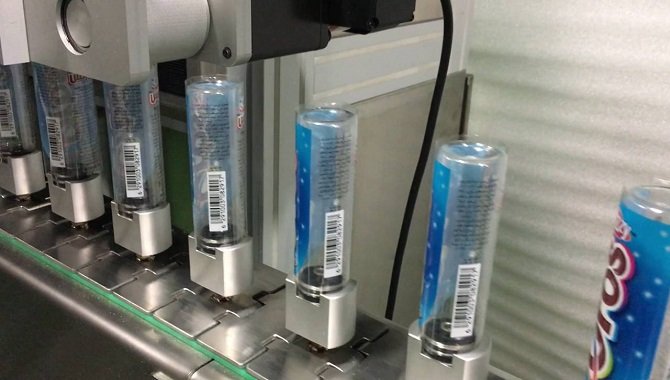
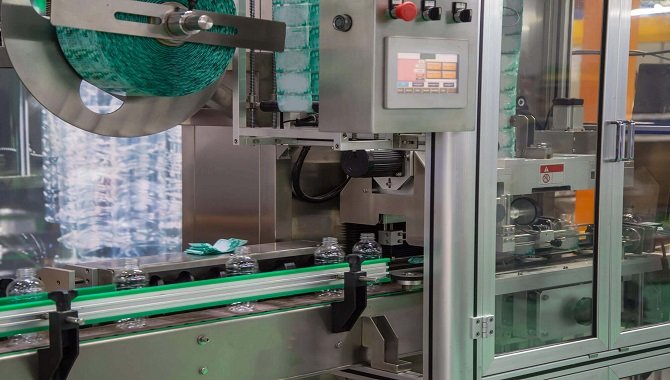
Our range of Shrink Sleeve Machines can perform a variety of applications including full-body sleeve, partial body sleeve, tamper evident band, and full body over-the-cap sleeve. Several industries used this type of packaging technology such as:
- Foods and beverages
- Personal Care
- Cosmetic Industry
- Medical industry
- Pharma and Nutraceuticals
- Chemical Industry
- Dairy Products
Customized Shrink Sleeve Machines
No matter what your project, we can manufacture high-speed and high-accuracy shrink sleeve machines. You can choose the design, sizes, capacity, features, and other specifications of the machine to improve your packaging line’s efficiency.
Jochamp adopts unique and innovative technology to develop excellent shrink sleeve machines. Through advanced machinery, rich experience, and flexible packaging solutions, thousands of customers trust our packaging lines. We use high-quality stainless steel, strengthen aluminum construction, and internationally renowned parts to create fully customized equipment for your needs.
Related Products
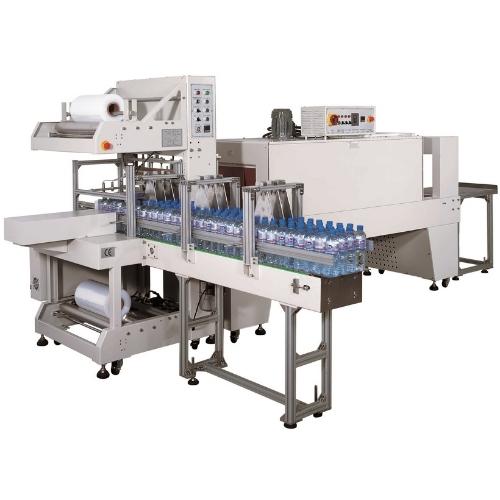
Shrink Sleeve Machines: The Ultimate Guide
Choosing a suitable shrink sleeve machine can be an overwhelming task without the right information. That guide will make everything simple and easy for you to understand.
Shrink sleeve applicator machine is involved in the process of applying shrink sleeve label on a given container.
Shrink sleeve applicator can perform functions like loading and grouping containers, label sleeve cutting and shrinking the sleeve.
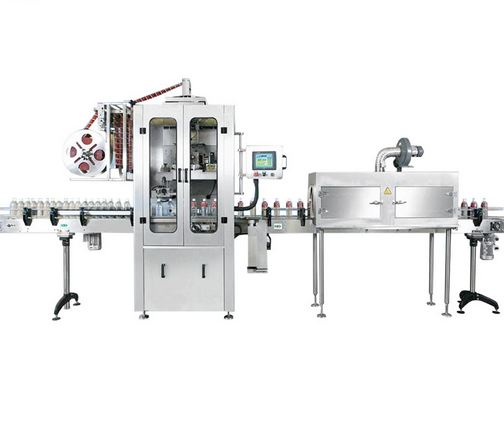
shrink sleeve machine
Flexibility
Shrink sleeve machine can handle containers of different sizes and design styles allowing a company to work with different containers.
Easy Changeover Process
An HMI touch screen is included in the design to enable easy and simple change over process during machine operations.
Versatility
A shrink sleeve machine is capable of handling various container types including those made with plastic, metal or glass materials.
Reliability
Most challenges attached to the operation of shrink sleeve machine have been researched and this machine is designed to overcome them.
High speed and efficiency
Shrink sleeve machine is capable of handling approximately 50 to 300 containers in a minute resulting in a high production output.
Minimized material wastage
Another benefit is that the machine is designed in a no container no machine operation principle hence no material wastage.
Recyclability of products
Shrink sleaving allows products to be reused over and over again because they do not interfere with the structure of containers.
Tamper evident sleeves
Once the container has been shrink-sleeved, the customers are assured of safe and genuine products.
Automatic Shrink Sleeve Applicator Machine
Automatic shrink sleeve applicator machine is capable of inserting sleeve in the appropriate location on the different types of containers.
Due to automation, companies can use this machine, to reduce labour costs and increase production throughput.
Functions such as delivery and classification of containers, label sleeve cutting and sleeve positioning are performed automatically.
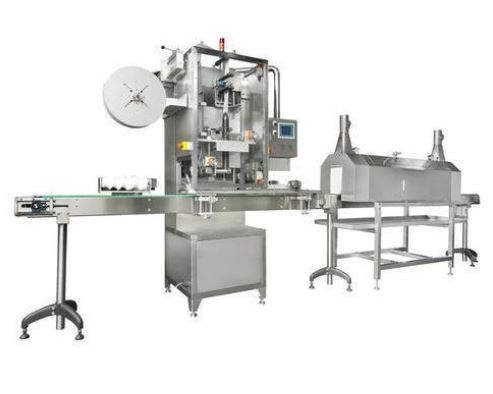
automatic shrink sleeve machine
Some of the features of automatic shrink sleeve machine include no container no sleeve, toolless changeover, servo-based with high speed.
The machine can be used for a wide range of containers in different sizes and shapes.
Other features that are optional include alarm stops the machine, inaccurate product rejection, tower light and printer.
Manual Shrink Sleeve Machine
Manual shrink sleeve applicator involves the use of a hand-held gun to apply the sleeves onto the containers.
Shrink sleeves are applied after they have been heated through a heating system designed within the gun.
Manual method is very slow are is not recommended for companies that produce in bulk.
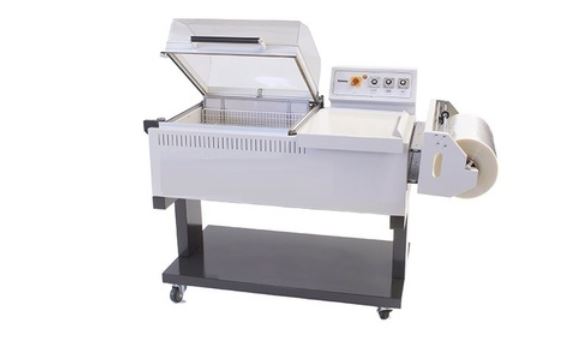
manual shrink sleeve machine
In terms of accuracy and consistency, the manual shrink sleeve machine is not accurate since it requires human labour.
Shrink Sleeve Tunnel Machine
Shrink sleeve tunnel machine uses electricity or steam or radiant sources of heat to aid in shrinking of sleaves.
The machine offers functions such as loading the sleeve rolls, applying the sleeves onto containers, cutting and shrinking the sleeves.
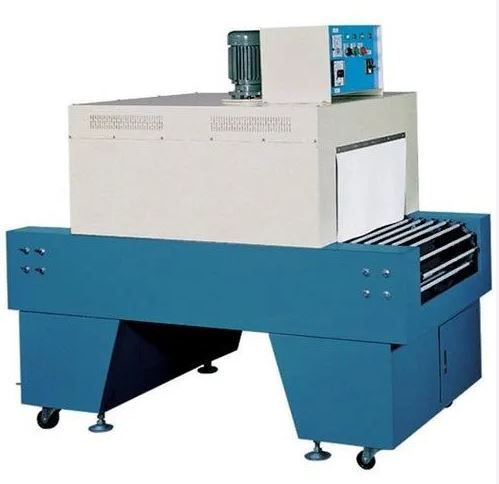
shrink sleeve tunnel machine
Machine features include ease of operation, digital temperature controller, PLC, Can be integrated into any production line.
Semi-automatic Shrink Sleeve Machine
Semi-automatic shrink sleeve machine does almost all the functions that an automatic machine can do.
One exception is that the operator has to load the sleeves and containers manually on the machine.
A semi-automatic shrink sleeve machine can perform functions like wrapping containers, cutting the sleeves and shrinking them.
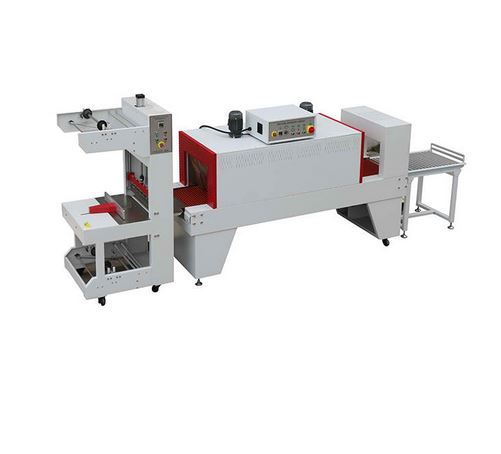
semi-automatic shrink sleeve machine
Some applications of the machine include sleeving liquid, canned product, bagged product containers etc.
Rotary Feed Shrink Sleeve Applicator
Rotary feed shrink sleeve applicator is used for full body application or tamper-free bands on to a wide range of containers.
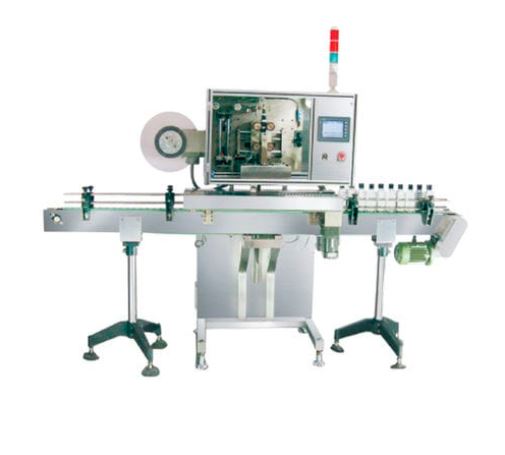
rotary feed shrink sleeve applicator
Vertical Automatic Shrink Sleeving Machine
Vertical automatic sleeving machine that is capable of performing functions like loading material, applying, cutting and shrinking the sleeves.
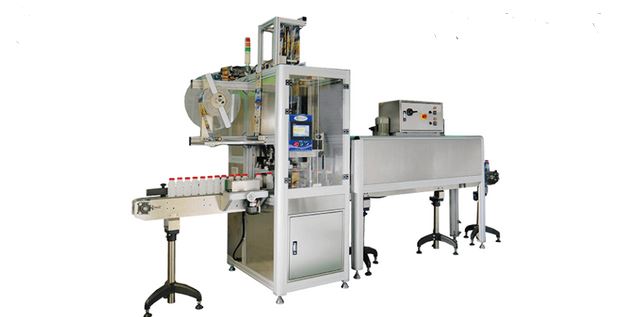
vertical automatic shrink sleeving machine
What makes this machine unique is that the sleeves are applied onto the containers in a vertical direction.
Shrink sleeve tunnel machine has a function after the shrink sleeve applicator has applied the sleeve on a container.
Machine is designed with loading mechanisms for sleeve rolls and containers of various materials.
Through a conveyer belt, the container is moved to the shrink sleeve tunnel to shrink the sleeve onto the container.
From the shrink tunnel, the container acquires a clean and attractive finish.
Shrink sleeve tunnel machine can use various types of heat sources including steam heat, electric heat and radiant heat.
Another function performed by the shrink sleeve tunnel machine is to apply a tamper-free sleeve on containers.
Shrink sleeve tunnel machines can handle all types of containers and with different sizes.
Sleeve Roll Carrier
Shrink sleeve roll is loaded and carried in the machine through carrier and it can be done automatically or manually.
Electric Motor System
Conveyers, rollers and all other moving parts of the machine are controlled through the electric motor system.
Conveyer System
Conveyer belts, guide rails are components that aid the movement of sleeve rolls and products from one station to another.
Container Separating Assembly
Once the containers have been loaded into the system, an assembly of equipment aids in classifying them into categories.
Separation procedure is done depending on the instructions through the PLC system.
Container Positioning System
Once the containers are loaded into the machine, the container positioning system aids in placing them in place for sleeving.
Cutter Mechanism
Cutting is necessary to separate the sleeve that has been applied to the container from the remaining roll.
A cutting mechanism is put in place to aid in carrying out this process.
Optical Scanner
An optical scanner is connected to the control system, HMI system, to aid in monitoring the whole shrink sleeving process.
Control System
A PLC system with a touch screen is put in place for entry of specifications, control and easy monitoring.
Through the control system, the operator is able to detect errors and stop the operation.
A touch screen interface allows the operator to troubleshot issues as they emerge.
Heat Tunnel
Heat is applied to the sleeve wrapped around the container at this station to create a completely clean sleave around the container.
Rotary Brushes
Rotary brushes are controlled by stepper motors to make sure that the shrink sleeve is wrapped properly on the container.
Loading the Shrink Sleeve Film
Shrink sleeve in a roll n is loaded onto the machine manually or automatically and is placed in position for wrapping on the product.
Loading the Products to Be Shrink-Sleeved
After the film roll has been loaded, products are also loaded into the product hoppers getting ready to be wrapped.
Container Separation
At this point, she machine is instructed through the control system on how to categorise containers into groups as required.
Wrapping The Products Using The Sleeves
At the wrapping station, the shrink sleeves are wrapped loosely on the surface that requires sleeving through an automated system.
Shrink sleeving can be done before or after filling the containers with products.
However, this will depend on the type of sleeve used.
Cutting Of The Sleeve
Cutting is done at this stage to separate the remaining sleeve roll from what has been applied onto the container.
Application Of Heat
Through the conveyer system, controlled through the electric motor, the loosely wrapped contained is moved to the tunnel.
At the tunnel heat is applied to the sleeve through steam, or electric or radiant source of heat.
Heat is meant to raise the temperature or the shrink sleeve so that it can shrink to the surface of the container.
Shrink sleeving obtained through steam as the source of heat produces better results compared to the other two sources.
Container Ejection
Once the sleeve has been shrunk onto the container, conveyer system moves it out of the machine to the next step.
Level Of Automation
Shrink sleeve applicator could be automatic or semi-automatic depending on the machine features.
Level of automation will depend on the speed needed for your operations and the capacity to be produced.
Fully automatic shrink sleeve applicator can run at speeds of approximately 300 BPM and is suitable for large scale production.
Material Used For Construction
A rigid stable structure will make the machine durable and stable and very reliable during operations.
Best shrink sleeve applicator machines are made from materials such as stainless steel and anodized aluminium alloys.
However, durability needs will be determined by the duration a company plans to use the machine for.
PLC Control System
A fully automated shrink sleeve applicator machine performs all the functions involved in the process.
Therefore, for easy control and monitoring of the whole process, a PLC system with a touch screen is necessary.
This choice will be determined by a number of factors including cost, production capacity and efficiency requirements.
Versatility
A machine that can work with a wide range of products is an advantage because in will save on expenses.
Versatile shrink sleeve applicator can work with container materials like plastic, glass, tin, pet, corrugated containers etc.
Again, the choice will depend on the company needs, choose what suits your needs.
Temperature Controller
Temperature control is one of the most important functions of a shrink sleeve applicator machine.
Controlling temperature will ensure that the shrinking process takes place as required to avoid overheating or underheating the sleeve.
A digital temperature controller is suitable for such and it will help to minimize damages on the containers and sleeves.
Easy And Minimized Maintenance
You should go for a machine with high cleaning feasibility contributed by less sharp corners, few crevices and smooth joints.
Cleaning should be easy and done manually and being able to dismantle the parts.
The kind of machine that does not require much maintenance because it has few mechanical components.
Shrink sleeve machines are used in various industries including pharmaceutical, chemical, food and beverage, cosmetics, electrical, detergents.
Various containers with contents such as drugs in syrup, honey, oil, bleach powder, electrical components, hair products etc can be labelled.
Shrink sleeve machines can shrink sleeves on various container materials including metals, plastics and glass.
Another use for shrink sleeve machine is to apply heat on the sleeves to make sure they stick neatly onto the containers.
Additionally, the machine can also apply labels on the sleeves before being shrunk onto the containers.
Shrink sleeve machines give containers an attractive appearance.
Shrink sleeve machines are designed in a footprint style and can fit into any given production line to increase production efficiency.
Integration into the production line can be done at a stage before or after the containers are filled with products.
This means that its very flexible and can be placed at the middle or the end of a production line.
Shrink sleeve machine offers various benefits including safety, reliability, accuracy, efficiency, high memory and flexibility.
When integrated into a production line, shrink sleeve machine can perform functions like sleeve wrapping, cutting, shrinking and shaping.
To begin the process, the sheet materials are printed through a digital printing press or a flexographic press.
Printing is done on the inside of the sleeve unlike in other labelling methods.
Printing is followed by creation of the sleeves and loading them onto rollers through an automated process.
Another function is to adjust the container design to the shrink sleeve.
A shrink sleeve labeller is designed in a way that it can distort the label on the sleeve.
Distorting the label is necessary to enable it to conform to the container size and shape.
Additionally, the machine is responsible for applying the sleeves onto the containers through the use of brushes.
Finally, a shrink sleeve labeller can be able to apply heat to the sleeve through the tunnel system.
- Rotary Feed Shrink Sleeve Applicator
Rotary feed shrink-sleeve applicators are used when there is need to apply labelled shrink sleeves that would cover the whole container.
A tamper-evident band is obtained in various sizes and shapes through this machine.
Containers with various shapes like square, round, or oval made of plastic metal or glass can be sleeved at high speeds.
- Mandrel Shrink Sleeve Applicator Machine
Mandrel shrink sleeve applicator machine a shrink sleeve equipment designed with a mandrel assembly.
The assembly is made up of a replaceable insert with cutting slot in between lower and upper elements within the assembly.
A shrink sleeve machine meant to apply shrinkable sleeve in the shape of a tube to products made of plastic, metal or glass.
- Steam Shrink Sleeve Tunnel
Steam shrink sleeve tunnels are designed to produce the shrinking heat through steam.
After the shrink sleeve applicator has wrapped the sleeves on the containers, the steam shrink sleeve tunnel applies heat that will shrink the sleeve.
This machine is recommended for containers with complex shapes.
- Direct Apply Shrink Sleeve Label Applicator Machine
Direct apply shrink sleeve label applicator can be used for various applications like tamper free sleeves that are not printed.
The machine can function at very high speed and is suitable for high-capacity production lines.
- Downgauging shrink sleeves
Downgauging shrink sleeves has a great impact on shrink sleeve machine cutting system.
A thinner gauge means that the cutting system will now work with ease because the material is softer and thinner.
Continuous Speed Production
Going for a machine that can guarantee high speed with every container type and design will ensure high efficiency.
Fully Integrating PLC And HMI
A fully automated machine designed with a PLC and HMI with a touch screen is sure to increase machine efficiency.
Use Downgauged Shrink Sleeves
Using downgauged shrink sleeves that would be softer and easier to cut through the cutting system.
This is meant to increase the working speed of the machine.
Related Resources:
For all your sleeve shrink wrapping machine, contact us now.