


In the automatic packaging of pharmaceuticals and food items, failure of the mesin pengemas blister to make a tight seal will expose the products to the elements such as moisture, oxygen, and contamination. In such an event, the stability of the drugs is at risk, and a product recall becomes inevitable. Where there are problems in the sealing process, it is necessary to do away with the hit-and-miss adjustment and attend to four parameters: temperature, pressure, time, and alignment. The appropriate heat sealing temperature ranges from 120°C to 170°C, and pressure should be increased to 0.4-0.6 MPa.
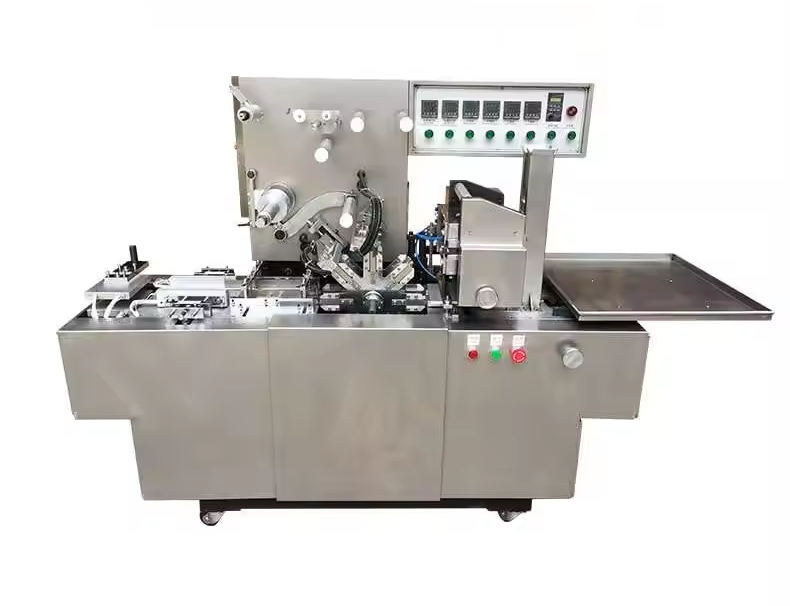
1. Quick Troubleshooting: 4 Common Causes of Loose Blister Sealing Issues in a Blister Packaging Machine
Where there is a problem with weak peel strength or micro-leakage around the edges of cards produced by a blister packaging machine, immediate replacement of mechanical parts is bound to waste a considerable amount of time. It would be wise for operators to look into four common operating constraints:
Temperature Drift or Inadequate Heating
The heating mechanism does not achieve the activation temperature of heat-seal lacquer (less than 115°C), which prevents PVC film and aluminum foil from bonding.
Inadequate Pneumatic System Pressure or Imbalance
There is less than 0.4 MPa of pressure provided through the pneumatic system, or there is angular misalignment of the upper and lower sealing plates of more than 0.05 mm.
Insufficient Time at Sealing Point Due to Excessive Speed
Machine speed is increased excessively to reduce the time spent in the sealing process, causing insufficient penetration of heat through the foil layer.
Accumulation of Debris on Knurling Plates
Carbonized material, plastic residues, or airborne dust clogs the grooves of the knurling plate, decreasing its contact surface.
The table below describes common visual defects, the reasons behind them, and the diagnostic parameters:
| Visual Defect | Primary Root Cause | Diagnostic Threshold |
| Complete Foil Separation | Low heating temperature / Inactive lacquer | Temperature more than 15°C below target |
| Uneven Sealing Strength
|
Platen Misalignment / Uneven Cylinder Force | Parallelism Deviation Above 0.05 mm
|
| Micro-Leaks Around Pockets | Low air pressure / Trapped air pockets | System air pressure less than 0.4 MPa |
| Film Scorching & Foil Cracking | Excessive heat / Extended dwell time | Temperature more than 20°C above limit |
2. Step-by-Step Solutions: How to Fix Blister Sealing Issues on Your Blister Packaging Machine
When you have identified the problem, please follow this technical guide to solve the sealing consistency issue of your blister packaging machine:
Step 1 – Calibration of Heating Elements & Temperature
Please do not rely only on the data shown on the HMI display screen because, in case the thermocouples fail, you will get an incorrect measurement.
- Surface Test: Measure the current temperature of the heating element/sealing roller at 5 different points (four corners and one in the middle) using either a surface-contact calibrated thermocouple probe or an industrial infrared pyrometer.
- Film-specific Ranges: Standard Film (PVC/ALU): The accurate surface temperature must be between 125°C and 145°C.
- ALU/ALU (cold-forming) film: Increase your temperature setting by 150°C-165°C to be able to heat up to the thick aluminum layers.
- Component Diagnosis: When there is a difference of 3°C between the temperature of the control panel and the actual temperature, check the resistance of each heating rod using a multimeter.
Step 2: Adjust Pneumatic Pressure and Precision Platen Alignment
Inconsistency in pressure causes the development of micro-gaps, through which moisture penetrates.
- Air Main Line Analysis: Examine the main inlet valve of your blister packaging machine to make sure that the factory pressure of the main air is always greater than 0.6 MPa.
- Pressure Regulator Adjustment: Calibrate the special output pressure regulator at the sealing station so that it supplies the stable working pressure of 0.45 – 0.55 MPa.
- Parallelism Adjustment: Move the upper sealing platen into manual position. Insert the precision 0.03 mm thick feeler gauge between the upper and lower knurling plates in each corner. Fine-tune the leveling tie rods to achieve uniform feeler gauge resistance at each point, with parallelism deviation below 0.03 mm.
Step 3: Speed Adjustment and Dwell Time Optimization
Proper dwell time under pressure is needed to complete the molecular bonding of the heat seal lacquer.
- New Parameters Calculation: Reduce the speed of the production line on the PLC display by 15 – 20%.
- Dwell Time Requirements: Make sure that the material stays under sealing pressure for 0.4 – 0.6 seconds per stroke.
- Gradual Incremental Increase in Speed: After establishing that the seal is completely free of any leaks via testing, slowly increase the machine speed in increments of 2-3 strokes per minute until operating speed and sealing quality are properly balanced.
Step 4: Clean and Realign the Knurling Tooling
Any fouled or damaged knurling grids will directly prevent proper mechanical bonding of the foil to the PVC.
- Cool Down Sequence: Disconnect the heating circuits and cool the seals down below 40° Celsius to protect your operators from burns.
- Cleaning with Chemical and Mechanical Means: Use an appropriate solvent or isopropyl alcohol to remove any burnt plastics. Vigorously scrub the grids in the direction of the grids using a soft brass brush.
- Tooling Protection: Absolutely no use of carbon steel brushes, scrapers, screwdrivers, or any other hard materials that would damage the pyramid points on the knurling grids.
- Wear Check: Use a loupe to examine the knurling ridges. If the points become dull from wear, send the plate to the factory for realignment.
3. Preventive Maintenance Tips to Prevent Sealing Failures in a Blister Packaging Machine
To avoid failure in sealing processes, there is a need for preventive maintenance for each blister packaging machine in the plant:
Shift End Cleansing Procedure
At the end of each shift, clean the knurling surface using a brass brush to avoid any carbonization of residues.
Pneumatic Checks Weekly
Check the seals on cylinders and calibrate the accuracy of digital pressure gauges with a master gauge.
Thermal Mapping Every Month
Conduct multi-point thermal mapping on the heating plates to ensure temperature variation on the surface is within 3°C.
Offline Quality Checks
Place the sealed blister packages inside a vacuum chamber with blue dye at -0.07 MPa for 30 seconds.
4. Conclusion
Troubleshooting unsealed or poorly sealed blister cards in a blister packaging machine involves managing four major variables: heat, pressure, time, and tooling. With proper diagnostics, one can ensure minimal material wastage and efficient production operations.
Accurate, robust, and high-quality hardware is necessary for stringent packaging requirements. As an industrial automation hardware provider, JOCHAMP designs high-quality blister packaging machines that are fitted with precise heat control and rigid mechanical construction, as well as a rapid change-over tooling system. If you would like to know more about troubleshooting sealing problems, customized tooling options, or upgrades to your current production line, feel free to consult our team at JOCHAMP.