


Blister packing is a common practice for medicines, healthcare products, electronic goods, hardware, and consumer items. It offers protection to the items while giving visibility of what lies inside. A Blister Sealing Machine becomes very significant in this regard because it joins together a formed blister and a lidding material.
Though sealing may appear like a simple operation, it is influenced by a number of elements such as temperature, pressure, time of sealing, and compatibility of materials. Knowing how the machine operates can be very helpful in this regard.
1. What Is a Blister Sealing Machine?
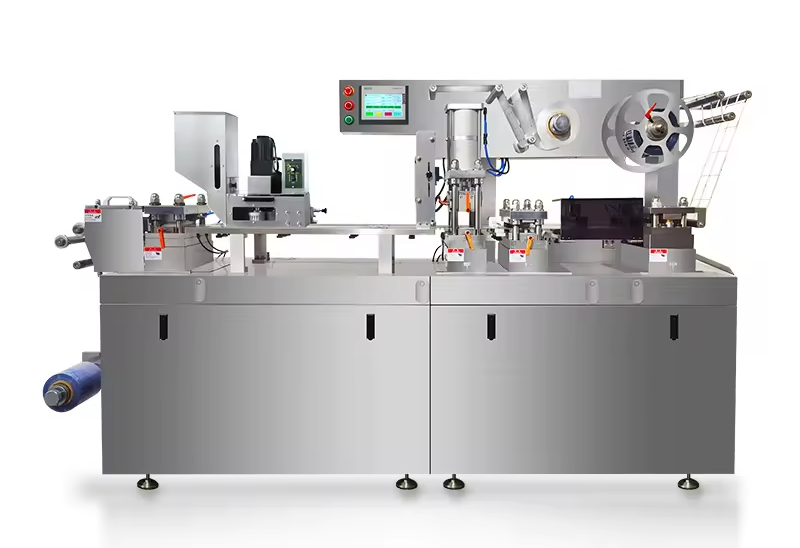
A Blister Sealing Machine is a type of packaging machinery that is used to seal a formed blister out of a plastic or aluminum sheet with a lidding film.
In this process, the blister forms individual compartments for products, and the lidding film seals the compartments and protects the items inside from any external threats, such as contamination, moisture, and mechanical damage.
Typically, a blister sealing system may have a heating station, sealing plate/roller, press, forming unit/feeding station, and control system. The method of sealing can vary from heat-and-pressure sealing to other methods depending on the type of machine.
It should be noted that there is a difference between a sealing machine and a blister packing machine. The main difference is that a sealing machine performs just a sealing process, whereas a packing machine combines sealing, feeding, forming, and cutting operations.
It is crucial that the sealing process is done properly since it influences the quality of the package. In pharmaceuticals, for example, proper sealing is required to ensure the protection of goods during transportation.
2. How Does a Blister Sealing Machine Work?
The working principle of a Blister Sealing Machine is based on creating a controlled bond between a formed blister and a compatible lidding material. The machine uses heat, pressure, and controlled contact time to soften or activate the sealing layer on the lidding material, allowing it to bond firmly with the edge of the blister.
The blister film and lidding material are usually made from materials with compatible sealing properties. When the materials reach the required temperature, the sealing layer becomes sufficiently soft or adhesive. A sealing plate or roller then applies uniform pressure across the sealing area. This pressure removes small gaps between the two materials and promotes continuous contact along the blister edge. As the materials cool, the sealing layer solidifies and forms a closed package.
The sealing quality depends on the balance between temperature, pressure, and dwell time. If the temperature is too low or the pressure is insufficient, the materials may not bond completely. Excessive heat or pressure, however, may deform the blister, damage the lidding material, or affect the packaged product. The machine therefore uses a heating system, pressure mechanism, and control system to maintain stable sealing conditions.
The sealing plate or roller is also designed to apply pressure only to the designated sealing area, keeping the product cavity free from direct compression. This structure helps protect the product while ensuring that the package perimeter is fully closed. After sealing, the bonded material forms a barrier against dust, moisture, and external contamination.
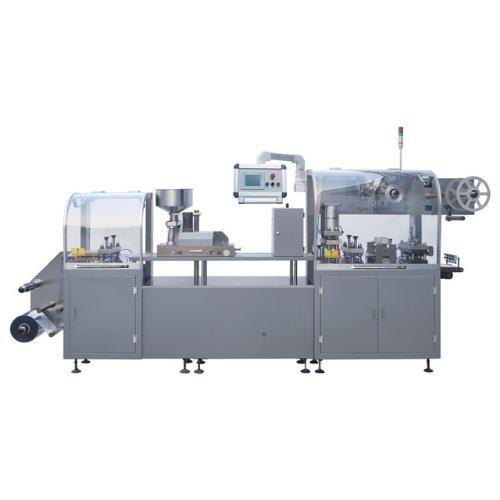
For manufacturers that need multiple blister packaging functions in one automated system, the JOCHAMP JCDP-260 Blister Packing Machine is an example of integrated blister packaging equipment. Its operating principle combines forming, product feeding, sealing, and cutting through coordinated mechanical and control systems. The machine can support a maximum forming depth of approximately 14 mm, a standard plate size of about 80 × 57 mm, and a production speed of up to 30 cycles per minute, depending on the product, material, and operating conditions. By coordinating these functions, the machine can reduce manual handling between stages and help maintain consistent forming and sealing performance.
3. What Factors Affect a Blister Sealing Machine’s Sealing Quality?
The effectiveness of the Blister Sealing Machine depends on the interaction of certain operational parameters. Even if the machine itself is in good condition, inadequate parameters may cause problems like poor sealing, deformation of materials, or inconsistency in packaging.
Sealing Temperature
The temperature should be appropriate for the properties of the blister and lidding materials. If the temperature is too low, the materials may not join well enough. Overheating can deform the film or affect heat-sensitive goods.
Sealing Pressure
The pressure makes sure that the two materials remain in constant contact while being sealed. Lack of pressure will prevent proper bonding of the materials, while too much pressure will deform the blister.
Sealing Time
The materials need to remain in contact for enough time to form a proper bond. Not enough time will lead to poor bonding, while overheating will cause deformation of the packaging materials
Compatibilidad de materiales
The blister film and lidding material must be suitable for the selected sealing method. Different combinations have different melting points, coating structures, and bonding characteristics, so sealing parameters cannot be applied universally.
4.Conclusion
A Blister Sealing Machine creates secure blister packages by carefully controlling the interaction between the blister material and lidding material. The basic process involves blister preparation, product filling, lidding alignment, heat and pressure application, and final cutting.
In order to have stable production, manufacturers should be very careful about temperature, pressure, sealing time, compatibility of materials, and package position. With these parameters being correctly controlled, the sealing process can offer stable integrity of packages and efficient production.
For additional information about Blister Sealing Machine or blister packaging machinery, please contacto Jochamp.