


Horizontal Case Packer Manufacturer in China
JOCHAMP is your one-stop horizontal case packer machine provider based in China. We manufacture advanced automated packing machines that can improve inventories and minimizes consumed time on item separation. You can tell us your desired specifications and trust our customization services and processes.
- Fácil de operar
- Made with automatic checking functions
- Faster & Cheaper
- Accurately packed the items
JOCHAMP Horizontal Case Packer
An efficient horizontal case packer that employs both mechanical and pneumatic motion control is available from JOCHAMP, cost-effective equipment. Different types of packing, such as standard slotted cases or half-slotted cases, trays, or wrap-around boxes, are all possible with this system. In addition, it has a wide range of options for future usage.
The machine can produce 10 to 15 boxes per minute, a good compromise between its power and size. The case packer formed a tube when the engine ran and forced the products within. The entire box then went towards the outlet, and the machine closed all the flaps and sealed them on both sides.
It is possible to put the automatic horizontal cartooning machine upstream or downstream of the packing line; either way, it functions well as a standalone unit. We can supply you with a one-stop solution for your packaging equipment needs. If you have any questions, please shoot us an email straight away!
Types of Horizontal Case Packers
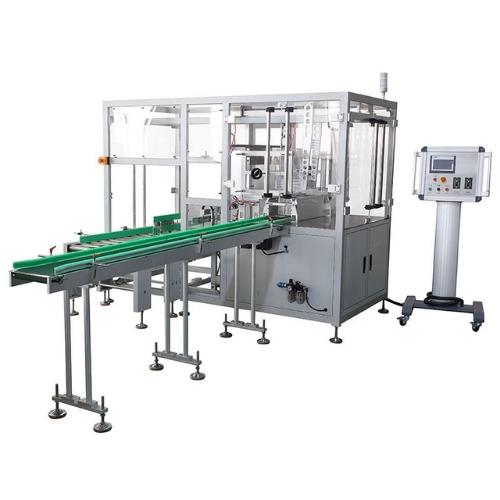
The JC-500S side load case packer is suitable for an economic side-feed carton loading program for square and regular type products. Adopting servo drive and PLC control, stable operation and precise carton loading. Equipped with a transparent safety door and one-key change function, suitable for flexible and high-efficiency production.
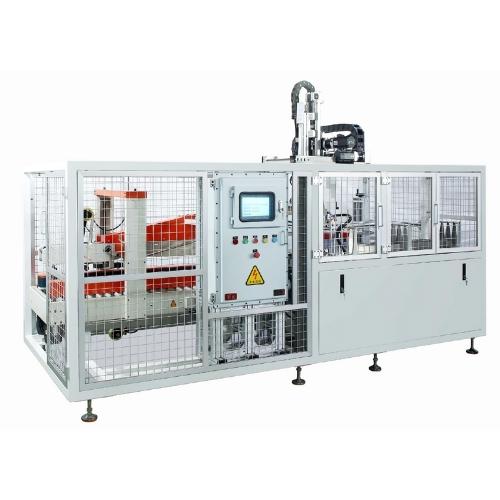
The JC-504 compact case packer integrates opening, loading and sealing, with compact structure and high degree of automation. The open design is easy to clean and maintain, meets the GMP clean production requirements, suitable for production workshops with high requirements on space and technology.
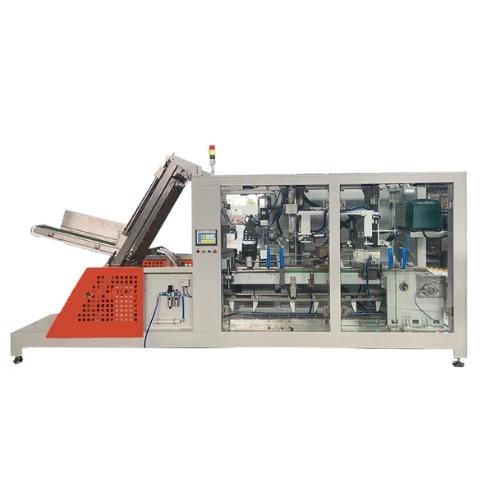
The single piece of corrugated paper is directly molded and wrapped for cartoning, which effectively reduces the waste of materials and cartoning process, and lowers the cost of packaging. Compared with the traditional cartoning method, it saves space, raw materials and equipment investment, and adapts to a wide range of product specifications and arrangements, making it an ideal choice for automated packaging that emphasizes cost efficiency and flexibility.
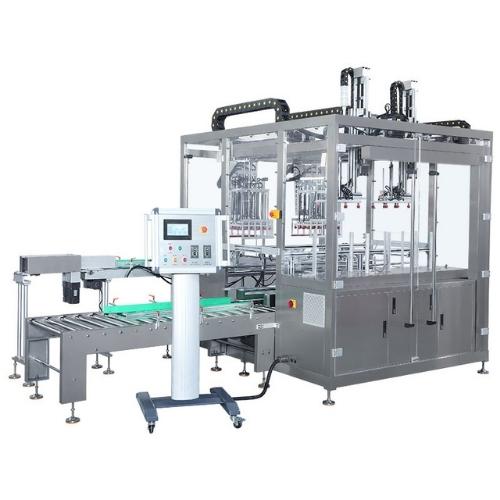
If you want to pack more products in a limited time, you can choose this horizontal packaging machine, double-station packaging machine, multiple servo motors work at the same time to achieve precise control, even if the packaging of heavy or irregular products is not a problem.
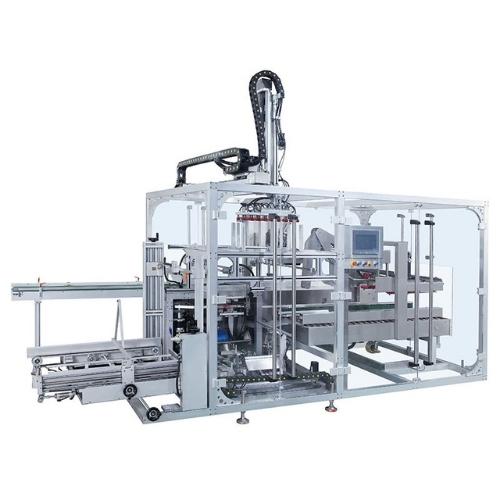
Integration of unpacking, upstream product palletizing, crating and sealing, the JC-600 mechanical case packer can achieve efficient packaging in a narrow space, full aluminum alloy frame design, easy to clean and corrosion resistant.
What is the Horizontal Case Packer
The horizontal case packer is an automated device that packs products into boxes quickly and orderly in a horizontal manner. It is widely used in such areas as food, beverages, medicine and consumer goods, greatly improving packaging efficiency while ensuring product safety and packaging accuracy.
What is a Horizontal Case Packer Used For
A horizontal case packer handles one of the most repetitive but important jobs on your packaging line: putting products into cartons. Instead of doing this by hand, the machine automatically pushes items, like pouches, bottles, or cartons, into ready-made cases from the side.
This helps speed up your whole packing process, keeps things running smoothly, lowers the chance of product damage, and cuts down on labor costs. It’s a go-to choice for fast-paced production in industries like food, personal care, and pharmaceuticals.
How a Horizontal Case Packer Works
A horizontal case packer automates the process of loading products into cases from the The horizontal cartoning machine that actually helps you automatically put the product horizontally into the box, which makes the packaging fast and stable. The general process is as follows:
- Products are Sent to the Machine
The products first come from the conveyor belt or upstream equipment, and will be sorted for the next packaging.
- Prepare Empty Boxes
The machine has a box warehouse, automatically takes empty boxes from it, and then opens the box.
- Put the Product Into the Box
The machine will push the product horizontally into the box, and can pack several at a time.
- Seal the Box
After the product is packed, the machine seals the box and prepares for the next step, such as labeling or palletizing.
- Send the Packed Box Out
Finally, the packed box is sent to the next link of the production line via the conveyor belt.
In short, this machine helps you save time and manpower, and can also ensure the quality of packaging, and the work efficiency is very good.
Why Choose a Horizontal Case Packer
- It Keeps Up When Things Get Busy
Let’s be honest—manual packing can’t keep pace when your line’s running full speed. That’s where this machine shines. It packs fast, and it doesn’t get tired. You’ll see dozens of cases filled every minute, without the stress or slowdown.
- Switching Products? No Big Deal
If your line handles different SKUs or mixed product formats, this machine won’t complain. It adapts quickly—with just a few tweaks—and doesn’t need a full retool every time you switch boxes or pack styles.
- You Don’t Need a Warehouse-Sized Space
Not every production floor has room to spare. We’ve seen facilities where every inch counts, and that’s exactly why we built this machine to fit tight layouts. It’s compact, but still delivers full-speed performance.
- Everything Goes Where It Should
You’ve probably seen messy packs before, products turned sideways, crammed in wrong, or just looking off. This packer avoids all that. It lines things up properly, gets the orientation right, and keeps everything looking neat inside the case.
- Grouping That Just Works
Before packing, items need to be grouped—and grouped right. That’s a step many systems struggle with. Ours doesn’t. Whether it’s single items, pairs, or a mix, it lines them up fast and gets them ready to go, no operator intervention needed.
- Changeovers in Minutes, Not Hours
Time lost during changeovers is time you don’t get back. We made sure your team can switch formats fast, no tools, no fuss. That means less downtime and more boxes out the door.
What Makes Up a Horizontal Case Packer
-
Mainframe and Enclosure
The structure holds everything together tightly. From the heavy-duty frame to the sealed electrical enclosures, every part is built to handle the demands of nonstop industrial packaging. You get strength, stability, and protection, all in one compact footprint.
- Construcción
The frame is the foundation of a machine, and it plays a key role in long-term durability. Therefore, Jochamp usually uses carbon steel as its frame, and sprays a layer of anodized aluminum profiles or powder-coated sheet metal on the surface, making the entire horizontal packaging machine easier to clean and more hygienic and safe.
- Enclosures and Electrics
All electrical equipment meets NEMA standards. The standardized Jochamp meets NEMA 12 standards. This horizontal case packer is suitable for use in dry factory workshops to achieve dust, drip and oil resistance.
If you have higher requirements and need to use it in a highly corrosive place, such as you need to package some seafood, dairy products, etc., you can customize electrical equipment that meets NEMA 4 and 4X standards.
-
Sistema de control
Let’s be honest, without a solid control system, even the best-built machine won’t get far. That’s why we rely on a responsive PLC paired with a smart, operator-friendly touchscreen to keep everything in sync, from case forming to sealing.
This setup isn’t just for automation—it’s designed to give your team better visibility, faster changeovers, and fewer headaches.
- Controlador PLC
Jochamp uses an industrial-grade PLC that handles real-time logic and motion coordination without delay. Every movement(case erecting, loading, sealing) is tightly synchronized. Need to change a pack pattern or tweak the cycle time? It’s all programmable.
No complicated re-coding needed, just update a few settings, and you’re back in production.
- Pantalla táctil HMI
Forget cryptic buttons or hard-to-navigate menus. Operators work with a clean, touch-based interface where they can view machine status, adjust key parameters, or troubleshoot with plain language.
Multilingual support is built in, and the screen layout can even be customized if your production requires different levels of access.
-
Product Infeed System
The feeding system is controlled by servo motors and photoelectric sensors, realizing ±2mm pitch accuracy and adapting to 60m/min line speed. Even if the product size fluctuates or the incoming material is uneven, it can still match the loading beat stably and avoid collision.
Conveyor belts are designed to dampen vibration and ensure that bagged, boxed and bottled products are conveyed with precise orientation and spacing. Multi-stage sensors monitor flow and position in real time, dynamically coordinating downstream movements to eliminate the risk of clogging at the source.
- Cintas transportadoras
Our servo-driven conveyor system transcends basic material handling. It actively regulates product spacing, orientation, and timing through synchronized motion control, critical for seamless integration with downstream grouping/loading stations. The vibration-damped belt structure eliminates product shift during transport, maintaining ±0.5° alignment accuracy even at 60m/min speeds. Compatible with pouches, rigid cartons, and unstable bottle geometries, its adaptive friction control prevents slippage while minimizing noise below 75dB(A).
- Sensores
They’re not just counting things. These sensors, lined up along the infeed conveyor, are constantly watching, detecting every product as it comes in, measuring the gaps between items, and kicking off the next step exactly when it should happen.
Why does that matter? Because in real-world production, things speed up, slow down, and sometimes get a little messy. The sensors make sure each group lands in the right spot before loading, no matter what.
When sensors talk smoothly with the motion controls, the whole system runs cleaner, faster, and with fewer headaches. It’s the kind of coordination that keeps jams from happening in the first place, not just fixing them after the fact.
-
Case Erecting Unit
Flat cartons go in, fully formed cases come out. Simple as that.
This unit grabs RSC-style blanks, pops them open, and gets them into position without missing a beat. It runs up to 12 cases a minute, and it’s all powered by servo arms and forming molds that don’t need much babysitting. Once it’s set, it just works.
Need to switch case sizes? You’re looking at under 5 minutes, tops. Whether you’re running something as small as 5.5 x 5.5 x 6 inches or as big as 21 x 16 x 22, it handles it without fuss.
Vacuum cups make sure each blank is picked up cleanly and formed square every time—no warping, no jamming, just smooth operation that keeps your line moving.
-
Pusher System
This is the part that gets your product where it needs to be—neatly, safely, and fast. The servo-driven pusher can move up to 15 times a minute, and depending on what you’re packing, the stroke length is fully adjustable—anywhere from 200 to 600 mm.
But speed isn’t everything. What really matters is how it moves. Instead of slamming products forward, the system uses a controlled acceleration curve—gradual in, gradual out. That means less impact, no damage, and better placement every time.
-
Product Handling Mechanisms
This part is actually quite important – after all, no matter how strange or heavy your products are, the packaging line must be able to move them around steadily. We use servo-controlled robotic arms, coupled with soft silicone suction cups, which are gentle and precise.
Whether you need small parts or large packages, no problem, they can handle them. The suction force of the suction cups can also be adjusted to prevent things from being damaged or slipping, which is quite practical.
Overall, this set of things is to help you reduce the error rate and ensure smooth packaging, without the trouble of moving things or placing them in the wrong position.
- Suction Cup Head
Speaking of suction cups, this thing is actually very important. We use soft silicone suction cups, which can gently grasp products of various shapes and materials without damaging or leaving marks.
The suction force can be adjusted, which is quite important – sometimes the product is relatively light, and adjusting the suction force too much will damage the surface, but adjusting it too little will prevent it from slipping. You can adjust it according to the actual situation, which is quite flexible.
Under normal circumstances, the suction cup can grab about 15 to 20 times per minute, which is fast enough for most packaging needs.
- Electro-Pneumatic Devices
This part can be understood as the “brain plus muscle” combination in the machine. The electronic control is responsible for issuing instructions, and the pneumatic device uses air power to complete various actions, such as pushing, forming and sealing.
The action response speed is very fast, generally less than 50 milliseconds, and the air pressure can be adjusted to a maximum of about 6 bars. After adjustment, it basically does not need to be adjusted every day, and the operation is very stable.
But don’t forget to maintain it regularly, especially the air filter. If it is blocked, the action will become slower or inaccurate, affecting efficiency.
- Mechanical Arm
The mechanical arm is mainly responsible for moving the product from one point to another. The movement is accurate and the repeatability error is about ±1 mm, which is sufficient for most packaging needs.
Its speed is generally 6 to 10 movements per minute, depending on the size and shape of your product. The mechanical arm is designed with flexibility in mind and can adapt to products of various shapes and sizes.
However, if your product is particularly light or has an odd shape, you may need to adjust the suction cup or add a buffer to avoid jitter or position deviation.
- Former’s Mould
Although the forming mold is not very conspicuous, it is very critical. Our molds are made of hardened steel, which is durable and accurate.
It is easy to adjust the size by hand wheel adjustment without tools. The accuracy can generally be controlled to ±1 mm, and you basically don’t need to move it often after adjustment.
As long as it is properly maintained, it can change specifications quickly without slowing down your production line.
-
Sistema de sellado
When it comes to sealing, Jochamp’s sealing system is quite flexible. It can use hot melt glue or self-adhesive tape, depending on your packaging needs.
It can accurately adjust the amount of glue to ensure that each sealing is firm and not wasted, and avoid rework due to poor sealing, which saves a lot of trouble.
Moreover, this system was designed with easy maintenance in mind. It is also simple to install and basically does not need to be monitored every day, ensuring that the production line runs steadily.
-
Case Discharge Conveyor
This outbound conveyor belt frame is assembled from stainless steel, and the width can be adjusted to accommodate various box sizes from 150 mm to 600 mm. In terms of speed, it can be adjusted to 10 to 60 meters per minute, which is quite flexible and can match different production line speeds.
It is equipped with a high-precision photoelectric sensor that can monitor the flow of boxes in real time to help you prevent jams or traffic jams. The conveyor rollers are relatively strong, and the design also takes into account low noise and easy maintenance, ensuring stable and quiet operation.
In addition, safety guards and emergency stop buttons are standard to protect the safety of operators and meet industry standards.
-
Características de seguridad
This horizontal case packer is equipped with a number of safety protection measures to ensure that the operator is not in danger and complies with relevant safety regulations.
For example, as soon as the safety door is opened, the machine will automatically stop to prevent accidents. The emergency stop button is arranged very reasonably, and the operator can stop the machine immediately with one press, and the response is very fast.
There are also light curtains and safety sensors that monitor the working area. Once an obstacle appears, the machine will automatically pause to avoid accidents.
Overall, the safety performance of this system meets or even exceeds industry standards such as CE and ANSI/PMMI B155.1.
Complementos opcionales
To meet diverse production needs and ensure seamless integration with your existing packaging line, we offer a range of optional modules:
-
-
Inspection and Quality Control
-
- Product Inspection Systems
You may not notice this small part when no fault occurs, but if you really remove this part, you will find that the situation is very different. It can help you check whether there is any problem with the appearance quantity before packing. Through detection, the rework rate can be greatly reduced and the waste of materials can be avoided.
- Barcode Readers
Nowadays, many industries, such as food and medicine, have strict product traceability requirements. Therefore, it is necessary to add a barcode reader to the horizontal packaging machine. When a problem occurs, the corresponding box or product can be found according to the barcode to retrieve and troubleshoot the problem.
- Checkweighing
If you are very strict about the quality of your product, I highly recommend installing a checkweighing on your horizontal case packer line. After the packaging is completed, checkweighing will check the weight of the box for you, to ensure that the weight of each box in the set error range, the minimum error can reach ± 1g per box, so that each box of products will not be lower than the target weight resulting in a number of complaints, but also because of the overweight resulting in a waste of materials.
- Case Inspection Systems
In addition to inspecting the product, the case must also be properly inspected to see if there are any missing parts wrongly loaded. This time, a case inspection system can help you solve the problem!
-
-
Product Handling
-
- Case Discharge Orientation Systems
In each case, you will find that the case can be oriented in the same direction every time. This is not a coincidence, but through the case discharge orientation systems, he can automatically rotate according to the angle you set, and control the pusher arm to change the direction of the case.
- Sistema transportador
The conveyor system, this part of the whole packaging machine is very inconspicuous, and it seems that every link you can see its figure, but you can not ignore its role. He can help you transport your products to the horizontal packaging machine smooth and high-speed transportation to each packaging link, to ensure the smooth operation of the packaging.
- Laner
If you are a large-scale manufacturer and want to pack more efficiently, laner is the ideal choice for you. he can help you to separate the products into different tracks, so that multiple cases can be completed at the same time, and the packing efficiency is greatly improved.
- Palletizing Module
In order to further reduce labor costs and improve the packaging process, the work of stacking the boxed products in the designated location can be entrusted to the palletizing module. It first picks up the boxed products, inserted into the partition. Your operators only need to poke a poke on the screen, the packaged product boxes will be stacked in the designated location waiting for the warehouse.
- Servo Downstacker
If you want the entire packaging line to be more complete and efficient, the servo downstacker can deliver the boxes to the packaging line one by one without manual operation, and work together with the palletizing module to make the connection between each operation of the packaging line smoother.
-
-
Etiquetado
-
- Labeling/Coding/Marking equipment
If your production line requires product traceability, branding, or regulatory compliance, we can integrate optional labeling, coding, or marking systems into the case packer. Whether you need to print barcodes, batch numbers, expiry dates, or QR codes, we support a wide range of printers, such as inkjet, thermal transfer, and laser coders.
These systems can be mounted on the conveyor, case flap, or finished package, depending on your layout and product type. Integration is seamless and fully synchronized with the packaging speed to ensure accurate, non-stop printing.
-
-
Comunicación
-
- Sistema de cambio automático
Al cambiar entre diferentes productos o especificaciones de empaque, ya no tendrá que soportar largos tiempos de inactividad ni ajustes repetidos. El sistema de cambio de formato automático de Jochamp permite realizar ajustes con un solo clic, incluyendo parámetros clave como el canal del producto, el tamaño de la caja, el método de disposición y la posición de empuje.
El sistema funciona con un servomotor y se combina con una receta predefinida. Los usuarios solo necesitan seleccionar las especificaciones del producto en la pantalla táctil para realizar el cambio de formato con precisión. Todo el proceso no requiere herramientas y evita errores humanos.
- Sistema de alerta visual inteligente
En el proceso de empaquetado, a veces se producen fallos que, de no detectarse a tiempo, pueden ocasionar grandes pérdidas económicas. Un sistema inteligente de alerta visual le permitirá despreocuparse.
No es necesario que los operarios se turnen en cada sala de operaciones; basta con una pantalla en el mango que, mediante luz e imágenes en color, alertará en tiempo real a los operarios sobre el estado y las condiciones de funcionamiento de la máquina de envasado horizontal.
- Intercambio de señales ascendente y descendente
Para garantizar una integración estable en su línea de producción automatizada, las estuchadoras Jochamp permiten la comunicación bidireccional con los equipos anteriores y posteriores. Ya sean máquinas de llenado, estuchadoras o básculas de control, o máquinas de sellado y robots paletizadores, todos los equipos pueden comunicarse y trabajar juntos en tiempo real.
Los equipos pueden interconectarse y controlarse mediante interfaces de E/S estándar o protocolos de comunicación industrial (Ethernet/IP, Profinet, Modbus, etc.), lo que garantiza el arranque y la parada automáticos, así como la sincronización del ritmo según el estado de los equipos de entrada y salida, evitando la congestión, el tiempo de inactividad o el desperdicio de producto.
-
-
Seguridad
-
- Paquete eléctrico intrínsecamente seguro
Si su producción involucra sustancias inflamables o se desarrolla en áreas con riesgo potencial de explosión, la seguridad eléctrica no es una opción, sino una necesidad. Jochamp ofrece paquetes intrínsecamente seguros (ISP) con certificaciones ATEX e IECEx, diseñados para entornos de alto riesgo.
El sistema garantiza que no se produzcan ignición de gases, vapores ni polvo en condiciones normales o de fallo, limitando la energía eléctrica y el calor en el circuito. Los componentes eléctricos clave, como las cajas de control, los sensores, los cables y las pantallas táctiles, son a prueba de explosiones y están certificados para su uso seguro en zonas peligrosas controladas.
Tipos de empacadoras horizontales
-
Empaquetadora horizontal de carga lateral
La estuchadora horizontal de carga lateral de Jochamp está diseñada para satisfacer las necesidades de envasado secundario, ofreciendo eficiencia y flexibilidad. La máquina introduce el producto en la caja de cartón de forma lateral y es especialmente adecuada para productos habituales como bolsas, tiras y cajas.
La máquina incorpora un sistema de empuje servoaccionado, lo que garantiza un proceso de empaquetado fluido y preciso. Esto no solo asegura que los productos no sufran daños, sino que también permite operar a alta velocidad. El equipo integra las funciones de apertura, carga y sellado automáticos; toda la línea está conectada y el ritmo está sincronizado, lo que mejora significativamente la eficiencia del empaquetado.
Estructura compacta, ocupa poco espacio, permite un cambio rápido de formato, especialmente adecuada para entornos de fábrica con altos requisitos de capacidad y flexibilidad.

-
Empaquetadora horizontal de carga inferior
La carga inferior es la opción más segura cuando los productos no se pueden girar, empujar ni dejar caer. La encajadora horizontal de carga inferior de Jochamp eleva la caja hasta la parte inferior del producto mediante una estructura elevadora para lograr una carga fluida del producto desde abajo dentro de la caja, especialmente para productos que necesitan mantenerse en posición vertical o evitar roturas, como botellas, latas, cajas o artículos paletizados.
A diferencia del método de empuje tradicional, esta máquina completa la carga de las cajas mediante el sistema en el que "la caja se eleva y el producto no se mueve", lo que reduce eficazmente la fuerza aplicada al producto y mejora la precisión y la estabilidad de la carga.
La máquina en su conjunto integra el control automático de alimentación, apertura, carga inferior y sellado, lo que la hace adecuada para industrias con altos requisitos de protección del embalaje, como la alimentaria y de bebidas, la cosmética, la de cuidado personal y la farmacéutica.

-
Empaquetadora horizontal de carga superior
La encajadora horizontal de carga superior Jochamp utiliza el sistema de encartonado vertical superior para colocar los productos de forma ordenada en cajas preformadas mediante un robot o un sistema de recogida y colocación. Es adecuada para productos que requieren personalización, contacto mínimo o que deben mantenerse en posición vertical, como cajas, bolsas, botellas, envases de flujo continuo, etc.
El equipo tiene una estructura modular, lo que facilita su integración con el sistema de clasificación anterior o el sistema de paletizado posterior; además, admite cambios rápidos entre múltiples especificaciones y variedades, lo que resulta ideal para gestionar referencias muy diversas y una producción flexible de pequeño volumen.
El método de carga superior también deja espacio para futuras actualizaciones y ampliaciones de la línea, lo que le ayuda a lograr una inversión sostenible a largo plazo.

Empaquetadora horizontal vs. Empaquetadora vertical
| Empaquetadora de cajas horizontal | Empaquetadora de cajas vertical | |
| Colocación de productos | horizontalmente | verticalmente |
| Productos adecuados | cartones, botellas y frascos | bolsas, estuches |
| Ventajas | manejar una amplia gama de formas y tamaños de productos | Diseño compacto, adecuado para operaciones de alta velocidad. |
| Desventajas | no eficiente en cuanto al espacio | No es adecuado para todas las formas y tamaños de productos. |
| Cambio | Puede requerir ajustes mecánicos adicionales. | Cambio de formato más rápido con pinzas modulares o autoguías. |
| Integración de línea | líneas de envasado o embotellado | máquinas de ensacado y VFFS |
| Industrias | Productos farmacéuticos, alimentos y bebidas, cuidado personal | Aperitivos, comida para mascotas, productos en polvo, comercio electrónico |
| Velocidad | velocidades medias a altas para embalaje rígido | manipulación de bolsas o sobres de alta velocidad |
Referencia de parámetros de la máquina de embalaje horizontal
Para ayudarle a evaluar la compatibilidad de producción, aquí tiene una referencia general de las especificaciones técnicas de la encajadora horizontal:
- Dimensiones de la máquinaAproximadamente 3500 mm (largo) × 1200 mm (ancho) × 1800 mm (alto)
- Peso de la máquina: Alrededor de 1500 kg
- Velocidad de embalajeHasta 20-30 cajas por minuto, dependiendo del tipo de producto y la configuración de la caja.
- Rango de tamaños de caja:
– Longitud: 200–600 mm
– Ancho: 150–400 mm
– Altura: 100–350 mm
- Compatibilidad del productoAdecuado para una variedad de productos agrupados, incluyendo cajas de cartón, botellas, bolsas y artículos envasados en bandejas.
- Fuente de alimentación: 220V / 380V, 50 / 60 Hz
- Consumo de energíaAproximadamente 3,5–5,5 kW, según las opciones seleccionadas.
- Requisito de presión de aire: 0,6 MPa
- Consumo de aire: 50–100 L/min
- Sistema de controlEquipado con un controlador lógico programable e interfaz de pantalla táctil, compatible con el almacenamiento de recetas, diagnósticos en tiempo real y cambios de formato.
- Bastidor de la máquinaAcero al carbono con tratamiento superficial; acero inoxidable disponible para entornos higiénicos.
- Características opcionales: Cambio automático, etiquetado o codificación de unidades, sistema de rechazo, monitorización remota y otros módulos listos para la integración.
Las especificaciones pueden variar según la configuración final. Se ofrecen opciones personalizadas bajo petición.
Conclusión
Ya sea que necesite embalar cajas, botellas, bolsas o palés, esta empacadora horizontal le brinda la flexibilidad, la eficiencia y el control de precisión que su línea de producción requiere. Su construcción robusta y sus parámetros ajustables permiten entornos de producción con múltiples referencias y alta frecuencia de cambio, así como la integración de diversos módulos de automatización según sea necesario.
Jochamp se compromete a crear soluciones de embalaje inteligentes, listas para su uso en línea y escalables.